
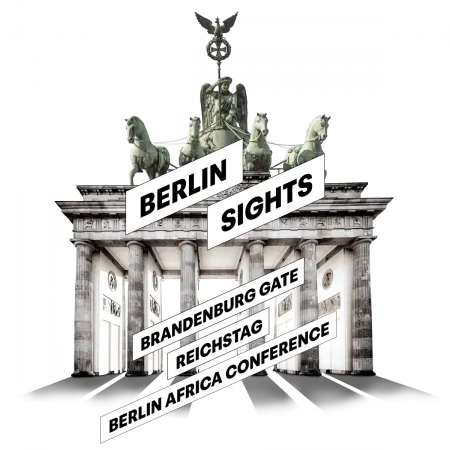
About this tour
- Takes place on
- Duration
- Meeting point
- Endpoint
- Accessibility
Your experience
✓ Black people like Anton-Wilhelm Amo have lived in Germany since the 18th century. Learn more about him and the street named after him.
✓ The Great Elector not only transformed the Tiergarten into a park, but was also involved in the transatlantic slave trade. We’ll explain how.
✓ Colonial policy was shaped in the Reichstag building starting in 1894. Here, you’ll learn which decisions continue to shape German identity to this day.
✓ Brandenburg Gate: What role do architecture and art play in colonial propaganda?
✓ Join us on a visit to the Sinti and Roma memorial and the memorial to the murdered Jewish people, and learn about the struggles behind them.
✓ Wilhelmstraße: Why is the Berlin Africa Conference one of the most important historical events in the world, and why don't we know anything about it?
✓ ★★★★★ 5.0 (1,200+ reviews)
✓ Tickets cost €29 per person
Who is considered German in Germany, and who is not?
This question was already being asked during the colonial era and continues to influence the lives of people of color in Germany to this day.The national borders of the African continent today are based on a four-month conference held in 1884: the so-called Congo or Berlin Africa Conference.
Despite the importance of this conference, very few people know about it.On this tour, we'll take a closer look at Germany's culture of remembrance.
Which stories are being told, and which ones are missing?
Who was Anton Wilhelm Amo? In 2025, after a 40-year struggle, a street was renamed in his honor.
Anton-Wilhelm Amo was a philosopher from Ghana who demonstrates that Black people have also been part of German society since the 18th century. Nevertheless, we often do not know their names.
This tour opens up colonial historical perspectives in Berlin-Mitte beyond the usual narratives. We combine historical facts with current debates about racism, the culture of remembrance and decolonization in the city.
This tour is for anyone interested in history, social contexts, and new perspectives on the city. Whether you're a Berliner or a visitor, this guided tour is sure to leave a lasting impression.
Behind the Brandenburg Gate, the Reichstag, and Anton-Wilhelm-Amo Street lies more than just postcard-perfect tourist sights. Our decolonial city tour shows how deeply colonialism is still rooted in Berlin’s cityscape today—and why this affects all of us.
- Tip for the tour guides
- Transportation from or to your own accommodation
- Drinks or snacks
- Rain or sun protection
- Group tours can be requested for Monday to Sunday at flexible times.
- Cash payments are possible for public tours in exceptional cases.
– Dogs are allowed as long as they are on a leash and do not disturb anyone.
Select an available date and time.
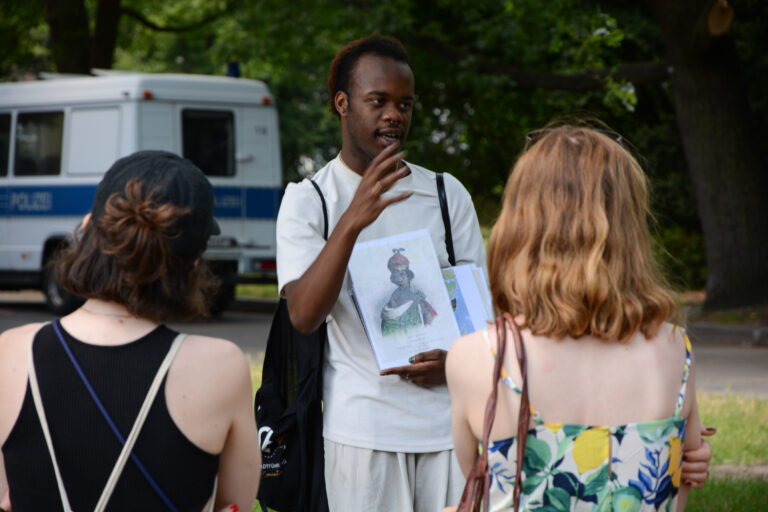
We offer private tours, workshops and lectures
Get out of the office or classroom! Take your friends and family on an exciting weekend trip! Come and experience a tour that will give you plenty to discuss and stimulate you.
Impressions
Our tour guides
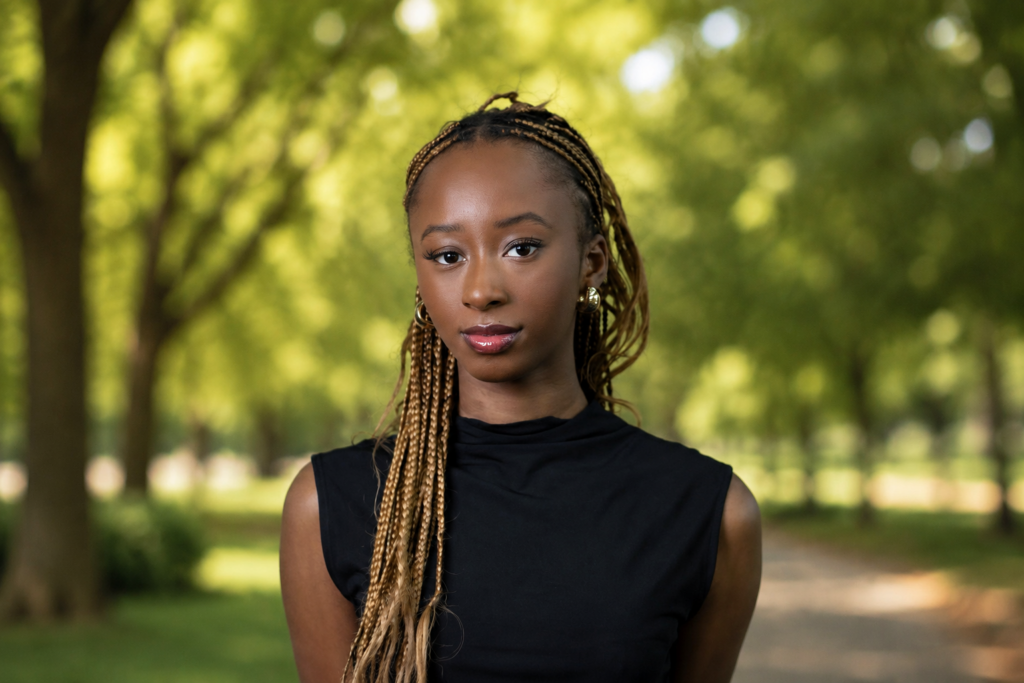
Britney

Marissa
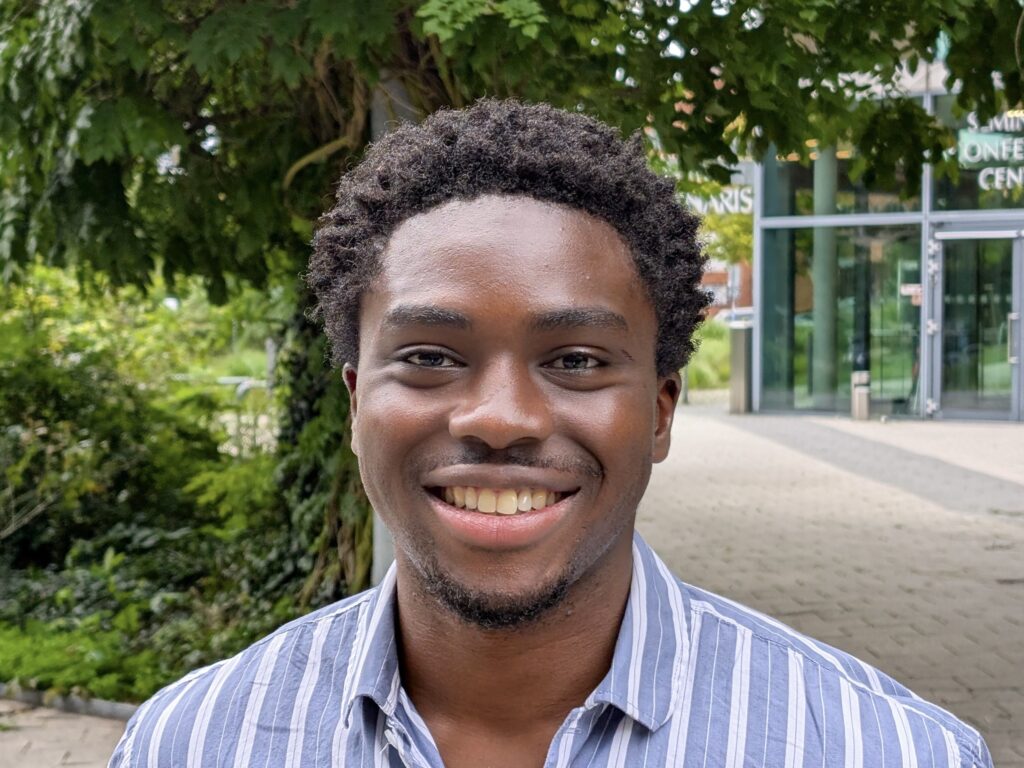
Abdoul
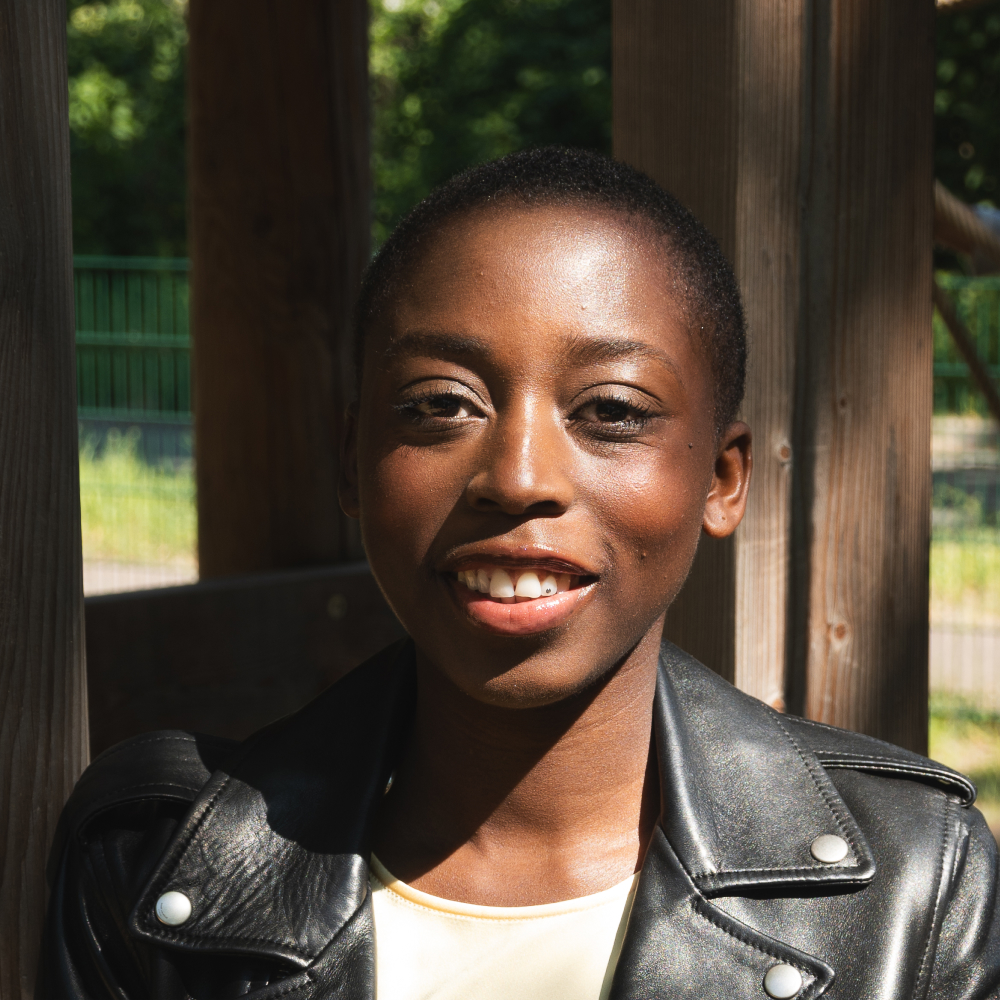
Justice
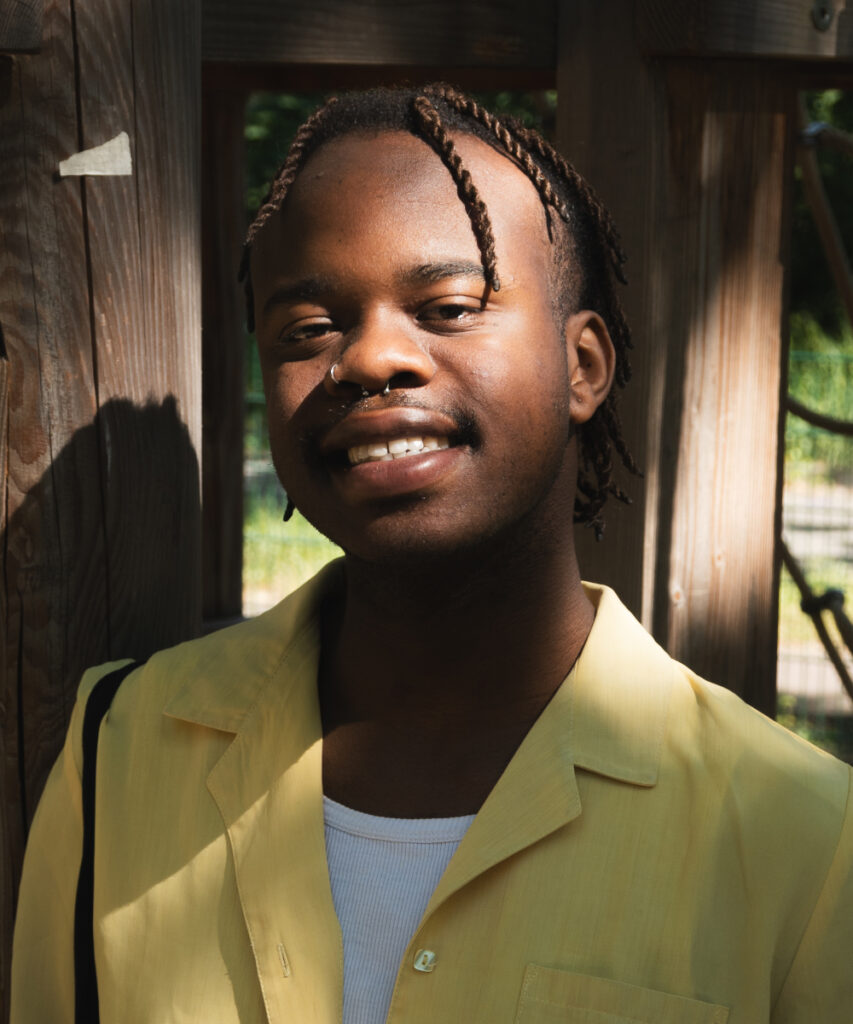
Thil
Frequently asked questions
Information about the tour
General topics
You can postpone the date. Just write us an e-mail in advance with your order number and the desired alternative date.
Cancellations are not possible.
Comfortable shoes, possibly a hot drink in a thermos flask or refreshing drink. Umbrella or sun protection depending on the weather.
We recommend participation from the age of 14.
To the other tours

85,00 €

From: 29,00 €