
Did you know that the so-called „witches“ of history were often female traditional healers? The infamous witch hunts, which began in the late 1480s, had their roots in the systematic persecution of women who practiced medicine and healing. This historical tragedy reflects not only the misogyny and power structures of the time, but also the suppression of female practitioners in favor of an emerging male-dominated field.
The phenomenon of the European witch hunts, which were most intense between the 15th and 18th centuries, represents one of the most extensive episodes of judicial persecution in premodern history. Belief in witches did not arise out of nowhere, but developed from medieval concerns about magic, sorcery, and the devil's work.
By the end of the 15th century, works such as the The Malleus Maleficarum both theological justifications and procedural guidelines for secular courts and inquisitors, which promoted the idea that witches existed, were in league with the devil, and deserved punishment. These texts fueled widespread fears that linked misfortune, illness, and unexplained events to malevolent forces acting in secret.
While popular myths often portray witch hunts as being conducted solely by the Church, historical evidence shows that many trials were carried out by secular authorities, using a combination of civil and ecclesiastical procedures, and reflecting broader societal fears. The witch hunts unfolded unevenly across Europe: while parts of Germany saw tens of thousands of trials and executions, regions such as Ireland had only a few cases.
Gender-specific fears, local politics, economic instability, environmental crises, and legal norms influenced when and where these persecutions flared up. This understanding of the context is crucial for avoiding oversimplified narratives that portray witch hunts as merely „religious“ or „superstitious“ phenomena, and instead highlighting their roots in real social, cultural, and institutional dynamics.
The story begins in 12th-century Europe, specifically in Salerno, the birthplace of modern medicine. At that time, both men and women were trained as healers and medical practitioners. With the Renaissance (1490–1520), however, universities became centers of academic medicine, and women were systematically excluded. With the rise of male physicians, female healers became unwanted competition. This shift coincided with the onset of the witch hunts, which were deeply rooted in the capitalist and patriarchal systems of the era.
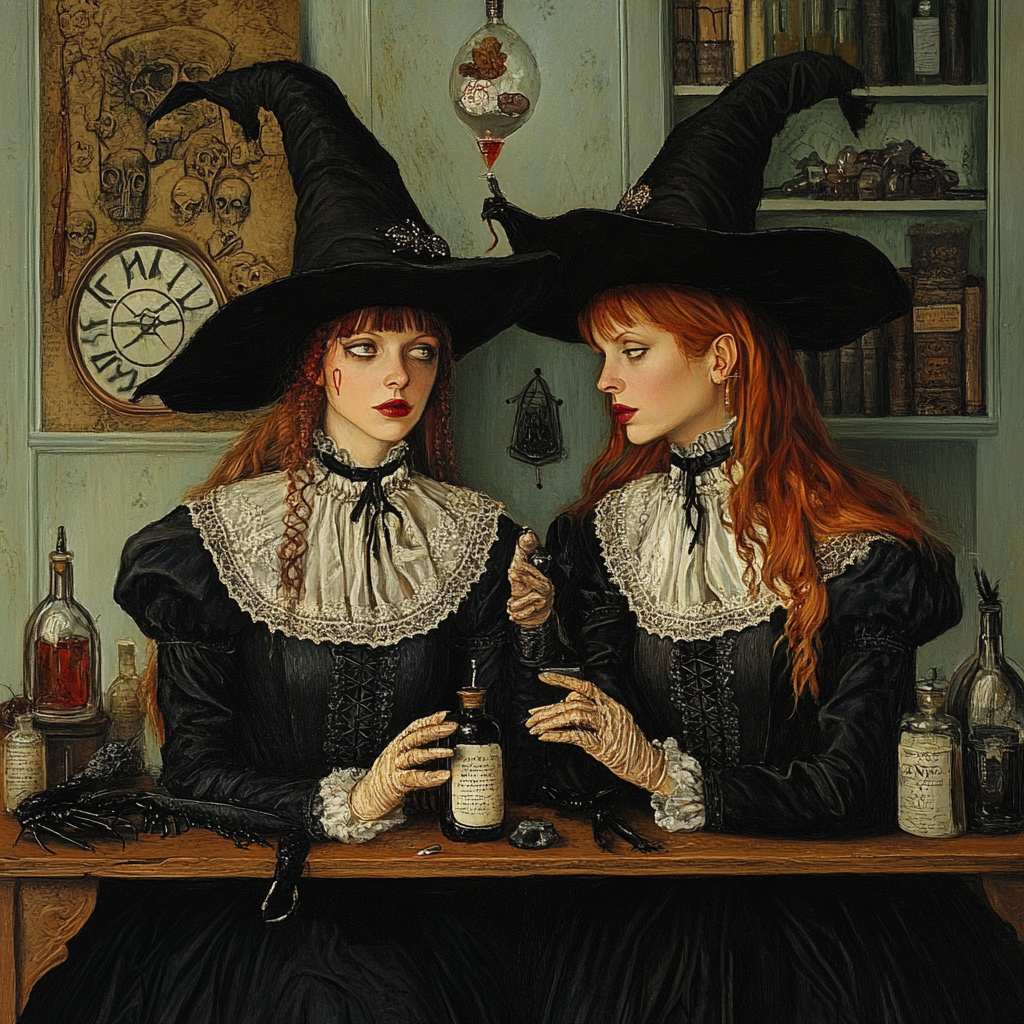
In premodern Europe, healthcare was not the exclusive privilege of university-trained physicians; a large part of everyday medical care was provided by women. Healers, midwives, and so-called „cunning folk“ offered herbal remedies, practical childbirth care, and community-based healing long before formal medical institutions were widespread. These women were often deeply embedded in local traditions of care and passed on their specialized knowledge through apprenticeship and oral tradition.
From the late Middle Ages onward, however, the rise of universities and medical guilds increasingly led to the exclusion of women; legal and educational barriers meant that, during the Renaissance, many cities reserved official healing privileges exclusively for men with academic qualifications. Historians point out that the exclusion of women from formal medical training not only marginalized their expertise but also shaped society’s perception of who was considered capable of healing and who was considered a charlatan.
Traditional female healers often operated in a gray area: respected by their neighbors for providing accessible care, yet vulnerable to accusations of illegal practices or causing harm. While some modern narratives claim that Witch hunts While some efforts were specifically aimed at eradicating women’s medical knowledge, experts caution that the relationship between gender, medicine, and persecution is complex.
Nevertheless, the roles of these women in the healthcare system reflect the changing landscape of medical authority, social control, and gender-based power in early modern Europe.
Accusations of witchcraft often stemmed from out of personal vendettas, religious zeal, or social fears. Women who practiced medicine or demonstrated knowledge that went beyond accepted norms were particularly at risk. They were subjected to horrific torture to extract confessions, which were then used as evidence in court.
The trials were anything but fair, and those convicted faced brutal punishments. Burning at the stake became a symbol of these executions, a method that was as horrific as it was symbolic of the complete annihilation of the accused.
The witch trials were deeply intertwined with the legal and judicial culture of early modern Europe. Once accused, suspects could be subjected to aggressive interrogation methods designed to extract confessions, often under duress or torture. Common methods, such as the water test, pricking insensitive areas, or protracted interrogations, reflected the belief that a confession was the surest way to prove guilt.
Legal manuals and treatises disseminated norms that sanctioned these practices and legitimized judicial violence, based on the assumption that witches were in league with the devil. In many regions, inquisitorial proceedings accepted confessions extracted under torture as primary evidence, further undermining the fairness of the trials.
Secular courts, particularly in German-speaking regions, handled the majority of cases and were often more eager to enforce the death penalty than ecclesiastical courts, which sometimes prioritized penance over execution.
Folk beliefs about nocturnal sabbats, pacts with the devil, and ominous omens merged with court records to form a vicious cycle in which accusations bred fear, fear led to harsher interrogations, and confessions provided justification for severe punishments.
These legal practices must be understood not merely as historical brutality, but as mechanisms that reinforced power structures and societal fears regarding disorder, crises, and the „other’s“ capacity to cause harm.
Thousands of innocent people, mostly women, were wrongfully accused, tortured, and executed in the name of the war on witchcraft. This period serves as a stark reminder of the dangers of mass hysteria, intolerance, and the unchecked authority of religious and political leaders. The witch hunts were not isolated incidents, but rather systemic, driven by social structures that prioritized control and subjugation over justice and reason.
Although European witch hunts are often viewed through the lens of gender, other intersecting social identities also influenced who was accused and why. Intersectionality describes the way in which overlapping systems of oppression—such as gender, economic status, age, and ethnicity—reinforce discrimination and risk.
In the context of early modern witch trials, women were disproportionately affected, but the dynamics of the accusations were more complex than mere misogyny. Poorer women, widows, and women without male protection were particularly at risk, as they lacked social capital and defenders within their communities. In rural areas, accusations often arose from local feuds, economic hardship, or attempts to resolve disputes over inheritance or labor.
While race as a category has varied historically—non-European individuals were rare in early modern Europe—studies of witchcraft in a global context show that in colonial settings, accusations were often linked to ethnic oppression and power imbalances.
Contemporary research also emphasizes that witch trials should not be reduced to a single dimension of oppression; rather, they arose from complex community conflicts and unequal social structures that could transform neighborhood tensions into legal prosecutions.
Overall, a nuanced understanding of intersectionality helps us recognize witch hunts as social phenomena rooted in multiple levels of power relations.
Secular courts played a significant role in these persecutions and sentenced the majority of the accused witches to death.
While men were occasionally accused and executed, the statistics are revealing: 80% of those accused and 85% of those convicted were women.
This discrepancy highlights the gender-specific nature of the witch hunts and underscores the patriarchal systems that fueled them.
The large-scale persecution of alleged witches had significant and long-lasting effects on European communities. In addition to the immediate trauma and loss of life suffered by the victims and their families, the elimination of local female healers, midwives, and keepers of traditional knowledge to disruptions in the informal healthcare networks on which many people depended, particularly in rural or economically marginalized areas without access to academically trained doctors.
Some historians suggest that this loss contributed to gaps in public health care and the decline of traditional remedies, while others caution against overly deterministic interpretations.
Beyond health concerns, the climate of fear and mistrust created by the witch hunts eroded community trust: Neighbors were encouraged to denounce one another, legal institutions were allowed to interfere in private matters, and deviant behavior could be equated with danger or hidden crime.
The repercussions of these practices continued to have an impact, reinforcing patriarchal norms and legitimizing punitive legal interventions based on rumors, prejudice, or scapegoating.
In some cases, the memory of the accusations persisted for generations, leading to long-term stigmatization of families and local history.
Understanding these consequences highlights the far-reaching impact of judicial power not only on individuals, but also on the very structures of European society.
The loss of so many women—many of whom were the only healers available to their communities—had devastating consequences for public health. At a time when most people could not afford formally trained doctors, these traditional healers were indispensable. Their elimination created a vacuum in medical care and cemented society’s dependence on a male-dominated medical system.
The period of witch hunts coincided with profound social changes, including the rise of centralized states, intensified religious conflicts, and the early stages of capitalist economic systems. Researchers note that witch trials interacted with these broader changes, as authorities and emerging elites sought to control social instability and consolidate legal and economic power.
Patriarchy—the systematic privileging of male authority in the family, the legal system, and intellectual spheres—shaped notions of gender and agency; many demonological texts explicitly portrayed women as morally or intellectually inferior, susceptible to diabolical influence, or inherently dangerous when exercising autonomy.
Modern historiography emphasizes, however, that patriarchy alone does not fully explain witch hunts: political instability, regional governance structures, economic competition, and communal tensions also contributed to the emergence of accusations and persecution. While earlier feminist interpretations argued that witch hunts were deliberately orchestrated to suppress women’s economic roles, contemporary historians caution against oversimplified causal claims.
Instead, witch trials are viewed as part of broader societal fears of deviance and disorder in times of change, with patriarchal norms serving as a cultural factor—though not the sole driver—of persecution.
The witch hunts also shed light on the interplay between capitalism and patriarchy. By systematically persecuting women as healers, the authorities not only eliminated competition for male doctors but also reinforced a narrative that delegitimized women’s roles in science and medicine.
This era marks a historic moment in which systematic oppression and discrimination were used to control knowledge, professions, and social power structures.
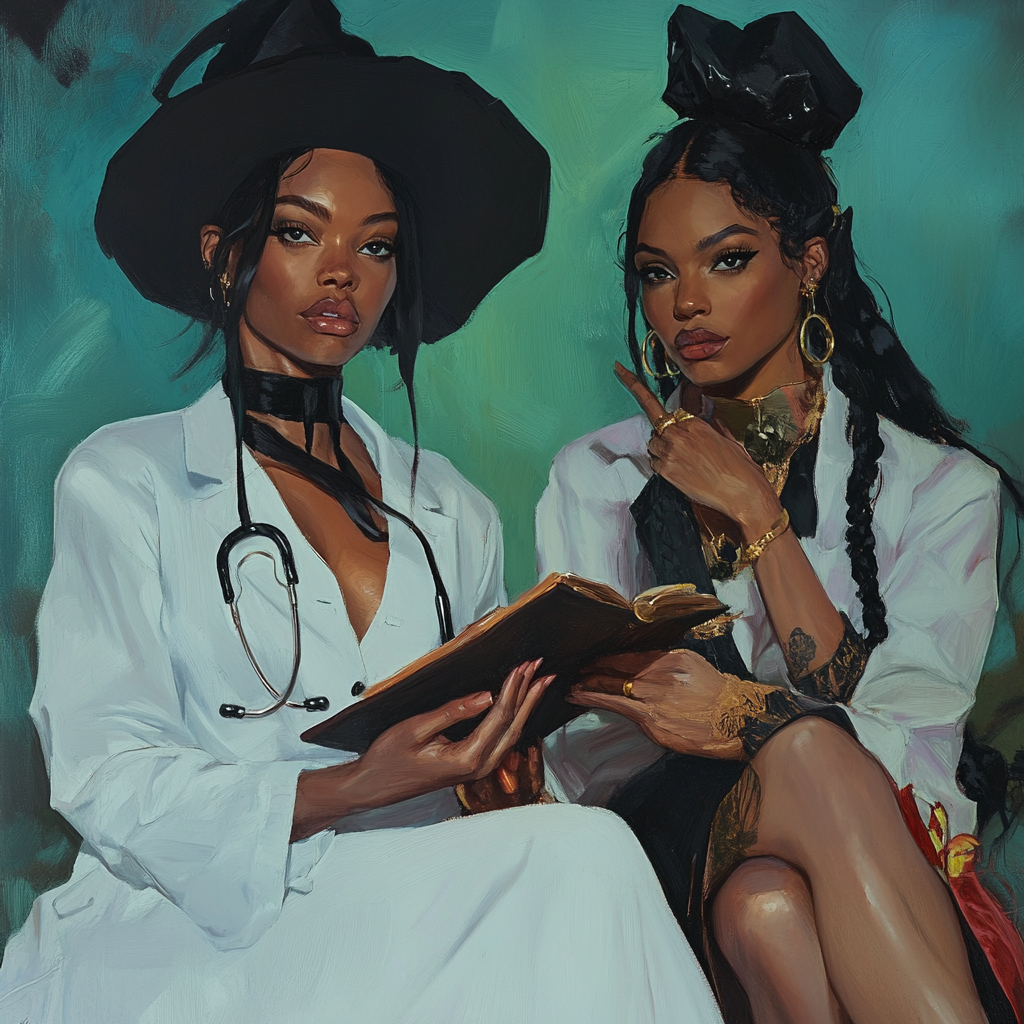
In recent decades, historians and scholars have critically reevaluated the narratives surrounding witch hunts, moving beyond sensationalized or mythologized accounts toward an evidence-based understanding. Earlier interpretations, particularly in popular culture, often portrayed witch hunts as a monolithic persecution of wise women or as one-dimensional expressions of patriarchal violence.
Today, researchers emphasize the complexity of the issue: while gender bias was a significant factor, the motivations behind these trials stemmed from a combination of legal norms, local politics, religious beliefs, and socio-psychological factors. Decolonial and intersectional approaches promote a more inclusive historical approach that acknowledges marginalized voices, including those of accused men, low-status women, and communities that are often absent from dominant historical narratives.
Examining witch hunts from a multifactorial perspective also reveals how fear, rumors, and legal proceedings can interact in destructive ways, Lessons that are also relevant to today’s problems, such as scapegoating, misinformation, and social exclusion. By critically reevaluating sources and long-held assumptions, historians contribute to a better public understanding of how structural biases and crises have historically shaped persecution and how critical reflection can challenge oversimplified historical myths.
Today, the legacy of the witch hunts invites critical reflection. Decolonial approaches emphasize the importance of reevaluating these events from multidimensional perspectives. Such approaches challenge traditional narratives and seek to dismantle the biases that have long shaped historical accounts. Viewing the witch hunts through this lens reveals the broader implications of oppression and the resilience required to reclaim marginalized histories.
Instead of perpetuating the demonization of „witches,“ we can honor their contributions as healers and acknowledge their unjust persecution. Their stories remind us to question dominant narratives and advocate for a more inclusive and just understanding of history. By acknowledging their legacy, we take a step toward redressing the harm caused by systems of power and control.
An examination of individual witch trials reveals the human dimension behind statistics and abstract analyses. A notable case occurred in Wiesensteig, Germany (1562–1563), where natural disasters such as hailstorms and crop failures were attributed to alleged witches; 67 women were executed, representing one of the major early mass trials of the period.
Another example, the Doruchów witch trial in Poland in the late 18th century, shows how similar dynamics persisted even as legal reforms began to limit executions; historical reevaluations suggest that early reports of many victims were exaggerated and reflected misunderstandings as well as contradictory records.
Cases like these illustrate how local conditions—ranging from economic hardship to political upheaval—could influence the course and outcome of witch hunts. They also underscore the importance of archival research and historiography in distinguishing myth from documentary evidence. Case studies like these humanize the statistics and show how fear, rumor, and institutional power interacted devastatingly within specific communities.
As we reflect on the tragedies of the past, we should also celebrate the resilience of those who were silenced. The so-called witches were more than victims—they were pioneers of healing, knowledge, and compassion. Their contributions deserve recognition, not condemnation. By reclaiming their stories, we challenge dominant narratives and advocate for a more inclusive understanding of history. But history doesn’t just live in books; it is still palpable today.
Discover the forgotten stories of strong women on our tour!
Delve into the history of oppression and resilience. Learn how colonialism, patriarchy, and racism continue to shape our world today, and how we can overcome them.
https://fowid.de/meldung/hexenverfolgungen
https://pmc.ncbi.nlm.nih.gov/articles/PMC1694293/
https://abzv.de/wissen-ideen/geschichte/hexenverfolgung-im-mittelalter/
https://www.gendercide.org/case_witchhunts.html
https://www.bpb.de/shop/zeitschriften/apuz/femizid-2023/519675/hexenverfolgung/