
Every line drawn on a map tells a story. These lines reflect identities that have been lost, shaped, and sometimes rediscovered. In Africa, they tell stories of geography interwoven with a complex history—a history that has been fragmented by foreign hands.
As explained in the previous video about the Berlin Conference, the 19th and 20th centuries marked a period in which European powers sought to gain control over Africa. They met in Berlin in 1884–1885 and drew lines on a map to divide the continent among themselves. These borders were created with little regard for the people or cultures they divided, leading to devastating consequences that continue to be felt today.
One of the most far-reaching, yet often overlooked, aspects of Africa's colonial experience lies in the methods used to European powers established colonial borders. Contrary to the simplistic narrative that borders were arbitrarily drawn with a ruler and compass at the Berlin Conference, recent research shows that the demarcation of borders was a protracted, contentious, and geographically embedded process that spanned decades.
African borders were not fully defined in Berlin; rather, they actually emerged over many years, often after Europeans had gathered detailed information about local political structures, waterways, and border policies. In some cases, formal colonial borders drew on existing political boundaries and significant geographical features—such as rivers and lakes—that had been important to African kingdoms long before the colonial era.
These characteristics influenced trade routes, alliances, and zones of conflict, and in turn shaped how colonial administrators sought to control and exploit territories. Although geography played a role, it was closely linked to the politics of power among the colonial states. Negotiations between European powers often prioritized strategic access to inland regions, resource-rich areas, and control over trade routes, rather than accurately reflecting local cultural or political realities.
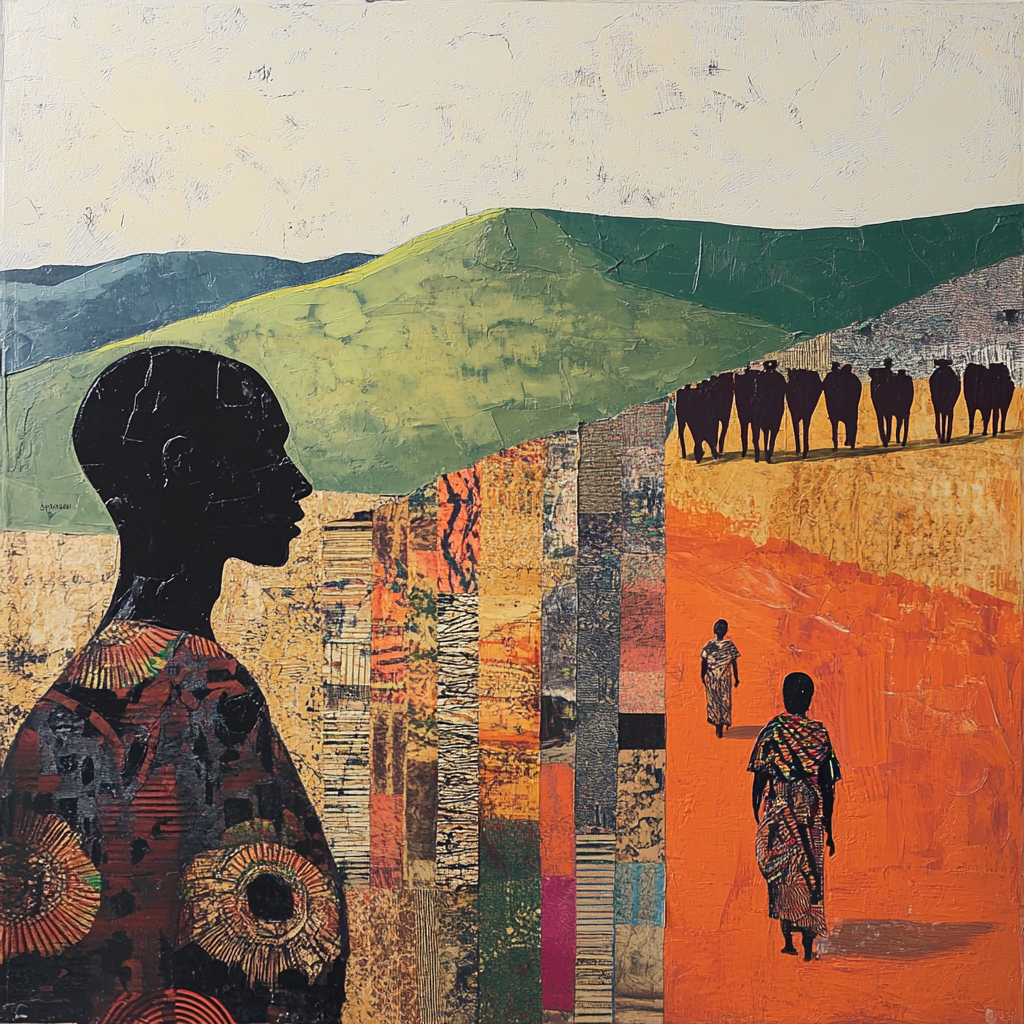
The result was borders that sometimes aligned with local realities and sometimes cut across them, causing many traditional societies to be fragmented or pieced together without local input. This hybrid outcome had profound implications for the political landscape that African nations inherited upon independence and has shaped modern interstate relations, identity politics, and administrative challenges.
Before the arrival of European colonial powers, the Somali people lived as a united community, bound together by a shared culture, language, and traditions.
Colonial borders, however, shattered this unity and scattered the Somali population across Somalia, Djibouti, Kenya, and Ethiopia. This was more than just a geographical redistribution: it tore families apart, reduced cohesive communities to scattered minorities, and exposed them to discrimination in their new countries.
For the Somali people, these imposed borders became painful reminders of the costs of colonialism. The Horn of Africa is a region that has been deeply affected by these arbitrary lines.
The colonial borders imposed on Africa had far-reaching cultural and social impacts, which went far beyond mere political boundaries. When European powers divided up the continent, they often did so without consulting the people living there—a process that split ethnic groups, undermined indigenous systems of government, and reshaped identities that had developed over centuries.
Colonial authorities frequently applied the principles of „divide and rule“ by dispersing communities of the same ethnicity across different colonies or by grouping historically rival groups into a single administrative unit to facilitate control and administration. This process disrupted centuries-old patterns of community life, traditional leadership, and social cohesion. In many regions, this led to fragmented administrative structures in which a single ethnic community was subject to different colonial administrations, each with distinct legal systems, languages of instruction, and economic priorities.
These divisions weakened traditional authorities such as chiefs and elders, who often mediated social disputes and coordinated community life. Over time, colonial languages, legal norms, and institutions further displaced indigenous languages and cultural practices, particularly through formal education systems and missionary work. This contributed to forms of cultural assimilation or hybridization, in which traditional ways of life were transformed, devalued, or marginalized.
The result is a complex landscape in which many Africans today navigate identities shaped by both their indigenous and colonial legacies, which continue to influence cultural practices, social norms, and community affiliations.
Nigeria offers another example of the challenges posed by colonial border-drawing. Before 1914, the region was a mosaic of powerful kingdoms and communities. The British, however, seeking administrative convenience, united the northern and southern regions into a single colony. This unification brought together very diverse groups—including large ones such as the Hausa, Yoruba, and Igbo, along with over 250 smaller communities—into a single colonial system.
This resulted in frequent tensions and conflicts. One of the most tragic outcomes was the Biafran War (1967–1970). Triggered by ethnic and political divisions, the war was marked by widespread suffering. A blockade imposed on Biafra by the Nigerian government caused devastating famines, claimed millions of lives, and highlighted the devastating consequences of artificial divisions.
After gaining independence in the mid-20th century, African states inherited borders that had been drawn under colonial rule. These borders were a key factor in the continent’s ongoing political instability, ethnic conflicts, and governance challenges. Since colonial borders often ignored the complex diversity of ethnic, linguistic, and cultural groups, many countries inherited highly heterogeneous populations under a single political authority, without any historical basis for centralized governance.
In countries such as Sudan, Nigeria, and the Congo, this contributed to tensions between communities with different identities, goals, and conceptions of state legitimacy. In some cases, this escalated into violent conflicts and secessionist movements. Disputes over land, resources, or political representation fueled tensions in regions where ethnic identities transcend national borders, leading to cycles of violence and retaliation. Borders became flashpoints, not only for territorial control but also for struggles over identity and belonging.
These tensions have been exacerbated by competition over natural resources—oil, minerals, and fertile land—which often crosses borders and involves multiple communities.
Beyond violent conflicts, colonial borders posed long-term governance challenges, including the difficulty of creating inclusive political institutions that fairly represent diverse groups, and problems of administrative coherence in countries with historically weak ties between population groups
Reflecting on these historical events often raises the question: What if things had been done differently? What if decisions about Africa's borders had been based on genuine understanding and respect for its diverse cultures and communities?
The Ethnographic Atlas, compiled by George Peter Murdock, was one such tool that could have provided valuable insights. It mapped the complexity and beauty of cultural landscapes and could have led to better decisions. But the colonial powers were driven by exploitation, not empathy.
The legacy of colonial borders in Africa extends to geographical and ecological areas, influencing ecosystems, mobility, and communities’ interactions with the land. Colonial borders often ignored natural features such as watersheds, migration routes, and ecological zones that traditionally shaped life on the continent. Instead, many borders were drawn along straight lines of latitude or longitude, fragmenting habitats and landscapes without regard for environmental continuity.
This complicates contemporary environmental governance and resource management, as ecosystems transcend borders even when political authorities do not recognize shared landscapes. A striking example is Lake Chad, a once-vast lake that has shrunk dramatically due to climate change and human activity. As Lake Chad recedes, communities in Nigeria, Niger, Chad, and Cameroon are facing dwindling grazing lands and water resources, which is forcing cross-border competition for increasingly scarce environmental resources and fueling conflicts.
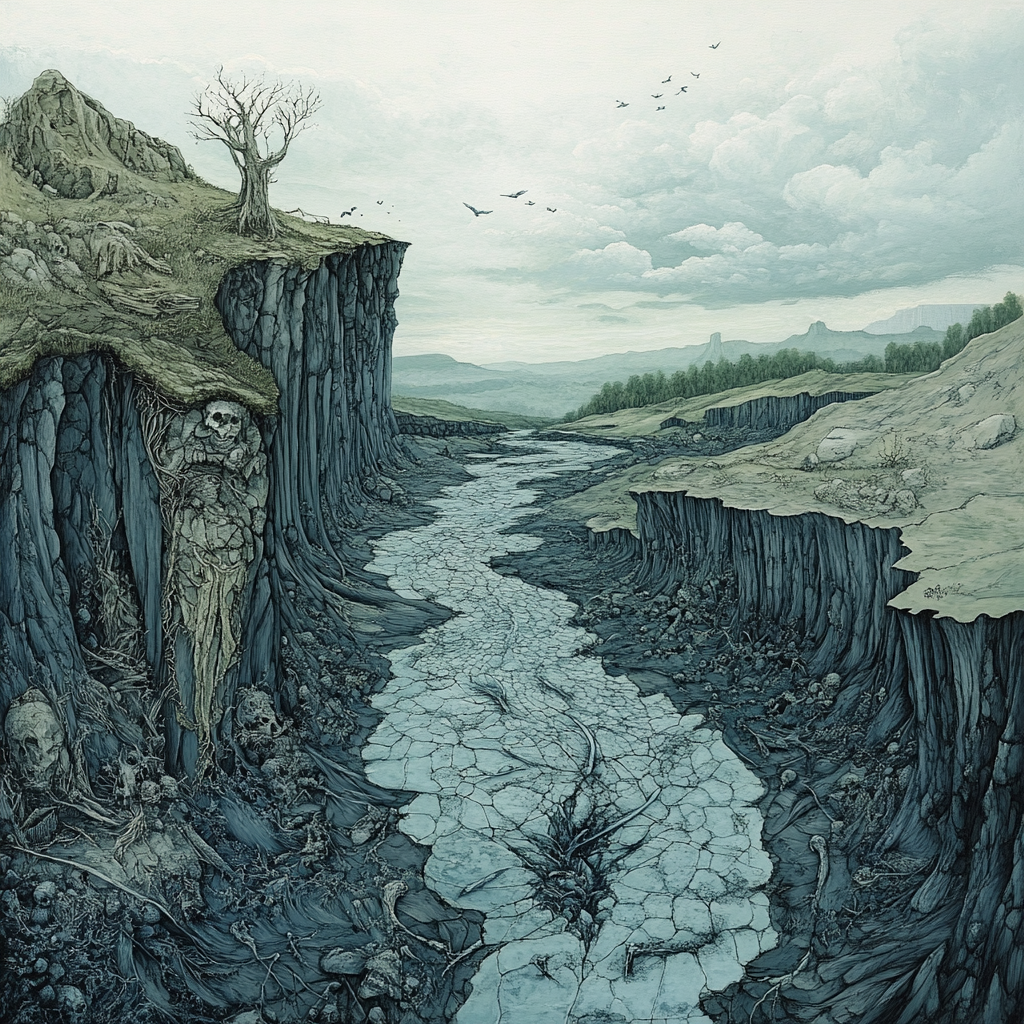
Similarly, pastoralists in the Sahel, whose livelihoods depend on seasonal mobility, have found that their traditional routes are cut off by modern borders that require visas or impose restrictions on movement, disrupting long-standing adaptation strategies and increasing vulnerability to drought and food insecurity. In coastal and delta regions such as the Nile Delta and the West African estuaries, environmental changes such as rising sea levels pose direct threats to once-stable borders.
Climate change knows no political boundaries, yet colonial borders often fail to provide flexible governance frameworks that enable a coordinated response to environmental crises affecting multiple states. These intersections between colonial legacies and environmental changes illustrate how historical decisions continue to shape both the relationship between humans and the environment and contemporary policymaking in Africa.
As Maya Angelou once said, „We do the best we can with what we know, and when we know better, we do better.“ If history had been based on knowledge, understanding, and empathy, we could be celebrating stories of unity and harmonious coexistence today, rather than tales of division and conflict. Although we cannot change the past, we can shape the future.
May the lessons from Africa’s fragmented history remind us of the importance of informed decisions and mutual respect as we work to build a better world. May we always strive to draw lines that unite rather than divide, and to honor the diversity of every community we encounter.
Despite the disruptive effects of colonial borders, African communities continue to engage in processes of cultural reconnection, identity formation, and regional solidarity. In the decades since independence, movements for cultural revival, political integration, and cross-border cooperation have sought to overcome the constraints imposed by artificial borders.
These efforts range from local grassroots initiatives to continental programs designed to foster unity while respecting diversity. Cultural festivals, trade networks, and diaspora connections have helped bridge historical divides between groups.
At the continental level, the African Union upholds the principle of respecting established borders to prevent conflicts, while at the same time promoting regional integration through free trade agreements and mobility pacts that facilitate cross-border movement.
At the same time, anthropological research shows how communities themselves embody transnational identities in their daily lives, whether through marriages, bilingual cultural expressions, shared rituals, or cross-border economic networks. These lived experiences challenge colonial orders by asserting forms of belonging based on historical relationships rather than on imposed political boundaries.
Border populations in regions such as the Chad Basin illustrate this dynamic by maintaining translocal ties and solidarities that transcend national borders. Scholars argue that such everyday practices represent forms of grassroots Pan-Africanism that reconnect fragmented communities through shared cultural logic rather than through top-down institutions.
This suggests that cultural identity in Africa is not static but is actively negotiated and can be reconstructed in response to historical disruptions, modern state systems, and global influences; ultimately, this confirms that identity transcends colonial cartography.
What are your thoughts on Africa's colonial borders? How can we use these lessons to promote understanding and justice in today's global landscape? Share your insights below.
https://www.aehnetwork.org/blog/african-borders-neither-random-nor-decided-at-the-berlin-conference/
https://elearncollege.com/arts-and-humanities/the-impact-of-colonial-borders-on-africa/
https://en.wikipedia.org/wiki/Desertification_in_Africa
https://www.tandfonline.com/doi/full/10.1080/08865655.2025.2504891
https://www.noemamag.com/the-surprising-durability-of-africas-colonial-borders/