
Did you know that April 4 is World Mining Day? Mining has a greater impact on our daily lives than we often realize. For example, 70% of the world’s cobalt is mined in the Democratic Republic of the Congo (DRC). This mineral is essential for the operation of your smartphone, your laptop, and most electronic devices. Without it, the modern technologies we rely on every day would not work.
But the history of cobalt mining also has a dark side. It is important to shed light on an urgent problem that is often hidden from the public: the ongoing war in the eastern regions of the Democratic Republic of the Congo. Military leaders and Rwandan rebels, funded by Western countries, are destabilizing this region to control cobalt and other valuable resources. The extraction of these minerals comes at a high human and environmental cost in the heart of Africa.
The Democratic Republic of the Congo’s mineral wealth has shaped its history for more than a century, long before cobalt became a critical global resource for modern technologies. During the Colonial period Foreign powers quickly recognized the region’s enormous mineral potential. Under Belgian colonial rule, vast mining concessions were granted to European companies, which focused on extracting copper, cobalt, uranium, and other valuable raw materials from provinces such as Katanga.
These activities prioritized profit and exports over the well-being of the local population, creating an extractive economic structure that benefited foreign industries while Congolese communities saw little development. Local workers were often forced to labor under harsh and dangerous conditions, laying the groundwork for many of the inequalities that persist to this day. When the country gained independence in 1960, the mining sector remained heavily influenced by foreign interests and political instability.
Nationalized mining companies struggled to manage the sector effectively while grappling with corruption, weak institutions, and external pressure from international corporations seeking access to the country’s resources. These historical dynamics have left a lasting legacy: The DRC continues to supply the global economy with critical minerals, while its citizens often see little of the benefits.
Understanding this colonial and postcolonial history is crucial to grasping the challenges that shape the modern cobalt industry and the broader debate on economic justice in the region.
The Democratic Republic of the Congo is the richest country in the world in terms of its natural resources. Its mineral deposits, estimated to be worth $24 trillion, include the world’s largest reserves of coltan as well as significant quantities of cobalt. Despite this immense wealth, many of these resources remain untapped or are mined by international companies and exported worldwide. Unfortunately, the local population reaps little benefit from this wealth. Instead, the people of the Congo bear the brunt of exploitation and violence, while international companies profit.
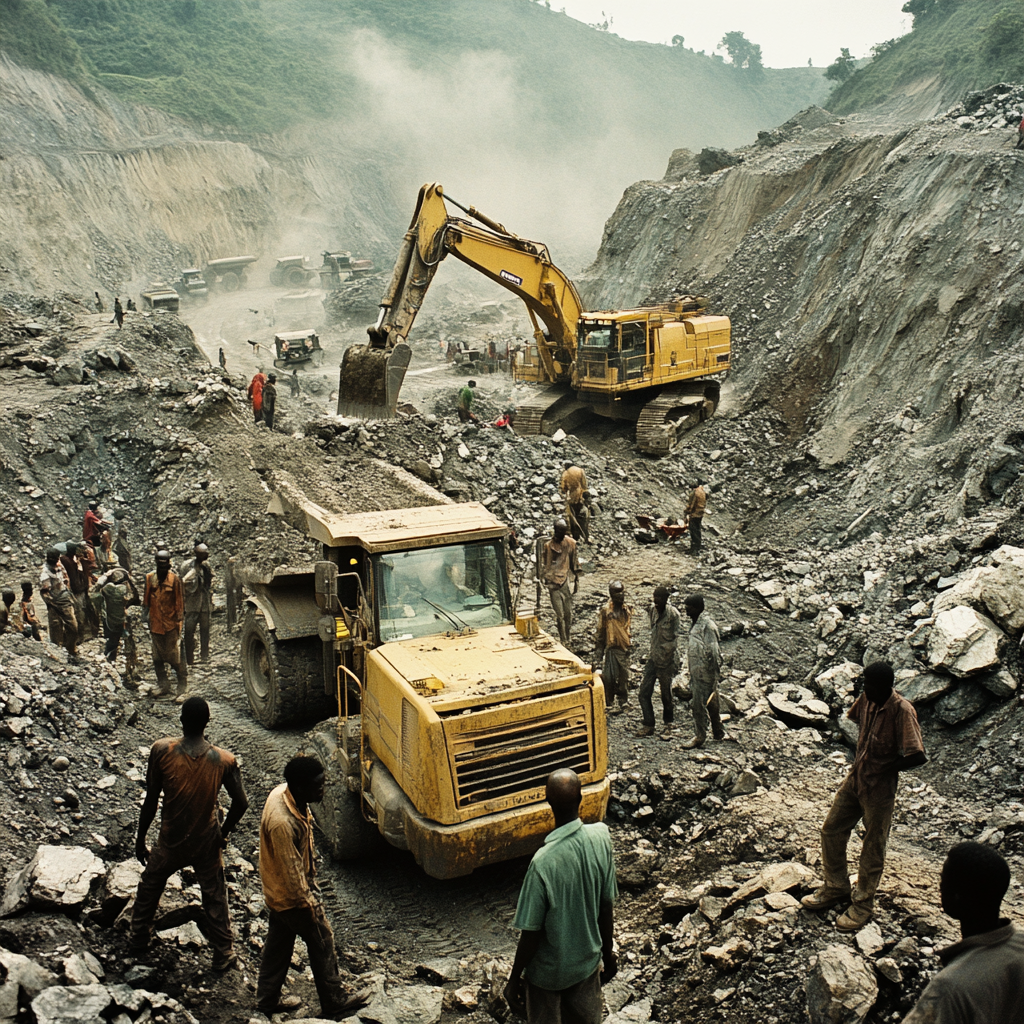
The lack of infrastructure and political stability in the Democratic Republic of the Congo further exacerbates the problem. Corruption, mismanagement, and external interference have created an environment in which the country’s natural resources do not benefit the population. Instead of promoting development and prosperity, these resources fuel conflicts and reinforce cycles of poverty. Working conditions and Human rights violations, The environmental impacts associated with the extraction of these raw materials are often downplayed, concealed, or misrepresented.
Human rights violations associated with cobalt mining go far beyond the issue of child labor, which often receives international attention. In many mining regions, entire communities have been displaced to make way for expanding mining projects. Families who have lived on their land for generations sometimes receive little to no warning before their homes and fields are destroyed to make way for new mining concessions.
In many cases, communities report that they receive little or no compensation and have few legal avenues to challenge these evictions. Security forces protecting mining operations have also been accused of intimidating residents, using violence, and restricting access to traditional farmland and water sources. Even inside the mines, workers are frequently exposed to extremely dangerous conditions. Small-scale miners often dig tunnels by hand without proper safety equipment, risking cave-ins, toxic dust, and serious injuries.
Wages are generally very low, forcing workers to spend long hours underground to support their families. Many miners also lack access to medical care or legal protection if they are injured on the job. These conditions highlight how deeply entrenched inequality is in the global supply chain for minerals such as cobalt. While companies and governments can profit financially from trade, the people who work directly in the mines are often among the poorest and most vulnerable members of society.
Millions of Congolese people, including children as young as seven, are forced to work in dangerous conditions for very low wages, often risking their lives to mine cobalt. This cobalt eventually ends up in the electronic devices we use every day from smartphones to electric cars. As the world transitions to more environmentally friendly technologies, it is important to recognize that this shift comes at a high cost for some of the world’s most vulnerable communities.
The human cost of cobalt mining is enormous. Many Congolese lose their lives mining these raw materials due to unsafe working conditions. Even more alarming is the use of brutal tactics by militias and rebels, including sexual violence as a weapon of war, to control mining areas. These methods force people to flee their homes and have plunged more than 7 million displaced people into a severe humanitarian crisis.
Families are torn apart, and children’s futures are jeopardized because they are forced to work instead of going to school. The environment also suffers significantly: landscapes are destroyed and water sources are polluted by mining activities. This multifaceted crisis underscores the need for immediate action and greater accountability.
Mining activities in the Democratic Republic of the Congo affect more than just people—they also have far-reaching consequences for the environment. Large-scale mining of cobalt and other minerals requires the clearing of vast tracts of land, which often leads to deforestation and the destruction of natural habitats. As forests disappear, wildlife populations decline, and local ecosystems become increasingly vulnerable.

In many mining areas, soil erosion is becoming a serious problem because the vegetation that once stabilized the soil has been removed. Water pollution is another major environmental problem. Waste from mining activities can release heavy metals and toxic chemicals into nearby rivers and streams. These pollutants contaminate drinking water sources and agricultural land, making it difficult for surrounding communities to grow crops or safely use local water sources.
Over time, this pollution can lead to long-term health problems, including respiratory diseases, skin conditions, and heavy metal poisoning. The environmental damage also undermines the livelihoods of the local population, which depends on fishing and agriculture. When rivers are polluted and farmland becomes infertile, families lose vital sources of food and income.
Because environmental regulations are often weak or poorly enforced, many mining companies are able to continue their operations without being held accountable for the damage they cause. Given the rising global demand for cobalt, it is becoming increasingly urgent to address these environmental issues in order to protect both ecosystems and human health.
Global demand for cobalt is closely linked to the rapid growth of modern technology and the transition to renewable energy. Cobalt is a key component of lithium-ion batteries, which power many of the devices people rely on every day, including smartphones, laptops, tablets, and electric vehicles. As governments and industries strive to reduce CO₂ emissions and move away from fossil fuels, demand for battery technology has surged.
Global demand for cobalt is closely linked to the rapid growth of modern technology and the transition to renewable energy. Cobalt is a key component of lithium-ion batteries, which power many of the devices people rely on every day, including smartphones, laptops, tablets, and electric vehicles. As governments and industries strive to reduce CO₂ emissions and move away from fossil fuels, demand for battery technology has surged.
Although electric vehicles and renewable energy are often promoted as environmentally friendly solutions, the materials used to manufacture them are frequently sourced under conditions that involve exploitation, environmental destruction, and economic inequality. Furthermore, the complexity of global supply chains makes it difficult to trace the original source of minerals once they enter international markets.
Cobalt mined by small-scale miners may pass through several intermediaries before reaching battery manufacturers and technology companies. This lack of transparency highlights the need for greater oversight and accountability throughout the global supply chain.
The situation surrounding cobalt in the Congo highlights the close interdependence of our global economy and the profound impact our consumption choices have on distant communities and ecosystems. Every smartphone, laptop, or electric car we buy is linked to a complex supply chain that often begins in places like the DRC. Once we understand this connection, we can begin to advocate for more ethical procurement practices to support organizations working to improve conditions in mining regions.
It is equally important to learn about the history and politics of the Congo. The country’s vast wealth of resources has made it a target of exploitation for centuries, from the colonial era to the present day. By acknowledging this history, we can better understand the causes of ongoing conflicts and work toward sustainable solutions.
Improving conditions in the cobalt industry requires coordinated efforts by governments, companies, civil society organizations, and consumers. One of the most important strategies is to increase transparency in global supply chains. Traceability systems can help track minerals from the moment they are mined to the final products on international markets. This ensures that cobalt comes from operations that adhere to fair labor standards and environmental protection.
Another important step is the formalization of artisanal mining. Millions of Congolese miners rely on small-scale mining for their livelihoods, yet these activities often operate outside official regulation. Through legal recognition, safety training, and access to protective gear, governments and organizations can significantly improve working conditions. International companies also play a vital role by implementing stricter supplier standards and conducting independent audits to verify compliance. Equally important is investing in local communities.
Revenue from mining could be used to build schools, hospitals, roads, and clean water infrastructure, allowing communities to benefit from the resources extracted from their land. Non-governmental organizations and activist groups continue to advocate for stronger labor rights, corporate responsibility, and environmental standards in the mining sector. Although progress remains uneven, these initiatives demonstrate that a more ethical and sustainable mining industry is possible.
As consumers, we have the power to drive change. Start by supporting companies that prioritize ethical sourcing and transparency in their supply chains. Look for certifications and initiatives that ensure fair wages and safe working conditions for miners. You can also reduce electronic waste by recycling old devices and supporting repairs.
Getting involved is also a powerful tool. Share information about the situation in the Congo with those around you and urge policymakers to take action. Support organizations that provide humanitarian aid and work toward long-term solutions in the region. Even small steps can contribute to a larger movement for justice and sustainability.
On this World Mining Day, we should remember the human cost behind the resources we often take for granted. The history of the Democratic Republic of the Congo is not just a history of mining; it is a history of exploitation, resilience, and the urgent need for accountability and reform. By drawing attention to these issues, we can honor the people affected by this crisis and advocate for a more just global economy.
The situation in the Democratic Republic of the Congo reflects a broader global pattern often referred to as the „resource curse.“ Many countries with large quantities of valuable natural resources struggle with economic inequality, political instability, and underdevelopment. Instead of creating prosperity for the population, the extraction of these resources sometimes leads to conflict, corruption, and foreign exploitation. The cobalt industry in the Congo illustrates just how deeply intertwined the global economy is. Devices used in homes, offices, and schools around the world depend on minerals mined thousands of miles away.
Yet the conditions under which these minerals are extracted often remain hidden from the consumers who depend on them. This disconnect raises important ethical questions about responsibility and accountability in global supply chains. Governments of wealthy countries, multinational corporations, and international financial institutions all play a role in how resources are extracted and distributed. Addressing the challenges of cobalt mining therefore requires not only local reforms within the DRC but also international cooperation and stronger global standards for responsible sourcing.
Investments in education, infrastructure, and governance in the Congo could help ensure that the country’s vast natural wealth benefits its citizens rather than exacerbating poverty and conflict. If the international community recognizes these broader connections, it can begin working toward a future in which natural resources contribute to sustainable development rather than exploitation.
Let’s commit to being informed consumers and dedicated advocates for change. Together, we can work toward a future where the abundance of resources benefits everyone, not just a privileged minority. The situation in the Congo may seem far away, but its effects affect us all. Let’s use this day to reflect, learn, and take action.