
The experience of Afro-Germans during the Nazi era is a story that often remains untold, but it is one of remarkable resilience and courage in the face of unimaginable prejudice and discrimination. An impressive personality who embodies this experience is Theodor Michael Wonja. Born on January 15, 1925, Theodor's life tells a moving story of survival and commitment in the midst of the oppressive atmosphere of Nazi Germany.
Long before the Nazi regime came to power, people of African descent were already living in Germany and contributing to German society. Their presence can largely be traced back to Germany's colonial activities in Africa in the late 19th and early 20th centuries. During the period of the German colonial empire (1884-1919), Germany controlled territories such as present-day Namibia, Cameroon, Togo and Tanzania. Colonial administrators, soldiers, workers and artists from these regions occasionally traveled to Germany and formed the earliest Afro-German communities. Some Africans came voluntarily as students, diplomats or workers, while others were brought to Europe as part of ethnographic exhibitions or colonial presentations.
These encounters led to both cultural exchange and interracial relationships, resulting in families and children who identified with both African and German heritage. Nevertheless, colonial ideology already placed Africans in a racial hierarchy in which Europeans were considered superior. These ideas influenced the social and political treatment of Afro-Germans even before the Nazi era. The violence and racism embedded in the colonial system was also evident in tragedies such as the Genocide of the Herero and Nama, which was committed by German colonial troops in what is now Namibia between 1904 and 1908.
Despite these oppressive structures, Afro-Germans formed small but resilient communities in cities such as Berlin and Hamburg. Their stories show that Black presence in Germany did not begin in the 20th century, but developed through complex historical connections shaped by colonialism, migration and cultural exchange. Understanding this early history provides an important context for the experiences of Afro-Germans during the Nazi era and beyond.
The time of Weimar Republic (1919-1933) represented a complex historical moment for Afro-Germans. After its defeat in the First World War, Germany underwent profound political, social and cultural changes. During these years, cities like Berlin became centers of artistic experimentation, nightlife and international cultural exchange.
This environment opened up opportunities for Afro-Germans and Black artists from abroad, particularly in music, theater and film. Jazz culture, which had strong African-American roots, gained popularity in Germany during the 1920s. Black musicians, dancers and entertainers found an audience that was curious about new forms of cultural expression.
Some Afro-Germans worked as actors, artists or athletes and gained visibility within the urban cultural scene. At the same time, however, racist attitudes towards black people also grew. After the war, French colonial troops from Africa were stationed in the Rhineland as part of the Allied occupation. German nationalists reacted to this with racist propaganda that portrayed these soldiers as a threat to German society.
Children born from relationships between German women and African soldiers were often stigmatized and referred to with derogatory terms. Although the constitution of the Weimar Republic officially propagated democratic ideals and equal citizenship rights, racial discrimination persisted in everyday life.
Afro-Germans often faced disadvantages in working life, education and social acceptance. Nevertheless, many people managed to build lives and careers and form communities and cultural networks during this time. However, the relative openness of the Weimar period soon ended with the rise of the Nazi regime in 1933, which replaced the fragile democratic freedoms with rigid racist policies that severely restricted the lives of Afro-Germans.
When the National Socialist Party came to power in 1933, its ideology was based on a strict racial hierarchy in which so-called „Aryans“ were at the top and many other groups were considered inferior. The National Socialist leadership believed that Germany's future depended on preserving a supposed „racial purity“. While much of the National Socialist racial policy focused on anti-Semitism, Black people in Germany were also the target of discriminatory laws and propaganda.
Nazi racial theorists falsely claimed that people of African descent were biologically inferior and incompatible with the German nation.
These pseudo-scientific ideas served to justify social exclusion and state control over the lives of Afro-Germans. With the introduction of the Nuremberg Laws in 1935, racial discrimination was enshrined in law.
These laws prohibited marriages and relationships between Jews and people of „German or kindred blood“, and similar racist attitudes also influenced measures against Black Germans.
Although Afro-Germans were not persecuted to the same extent as Jewish communities, they were often denied educational opportunities, denied access to certain professions and were under constant surveillance by the authorities.
Many were under pressure to remain as invisible as possible in social life so as not to attract the attention of the regime. The National Socialist propaganda also portrayed Africans and Afro-Germans as with racist stereotypes which reinforced colonial ideas.
At the same time, the regime condemned „miscegenation“ while glorifying the former German colonial empire, a contradiction within its own ideology. For Afro-Germans, this period meant a life of constant insecurity and discrimination in a society that increasingly defined belonging through „race“ rather than individual identity or achievement.
Theodor Michael Wonja's early years were characterized by systemic racism and prejudice. As a Black man growing up in Nazi Germany, his experiences reflected the increasing persecution of minorities during this time. His father, who was also Black, worked as an employee in so-called „Völkerschauen“.
These exhibitions, which were first organized in 1874 by Carl Hagenbeck were introduced to showcase people from the German colonies and often used actors to portray stereotypical roles. These „zoos“ were a grotesque spectacle that dehumanized people by turning them into mere exhibits for the entertainment of the public.
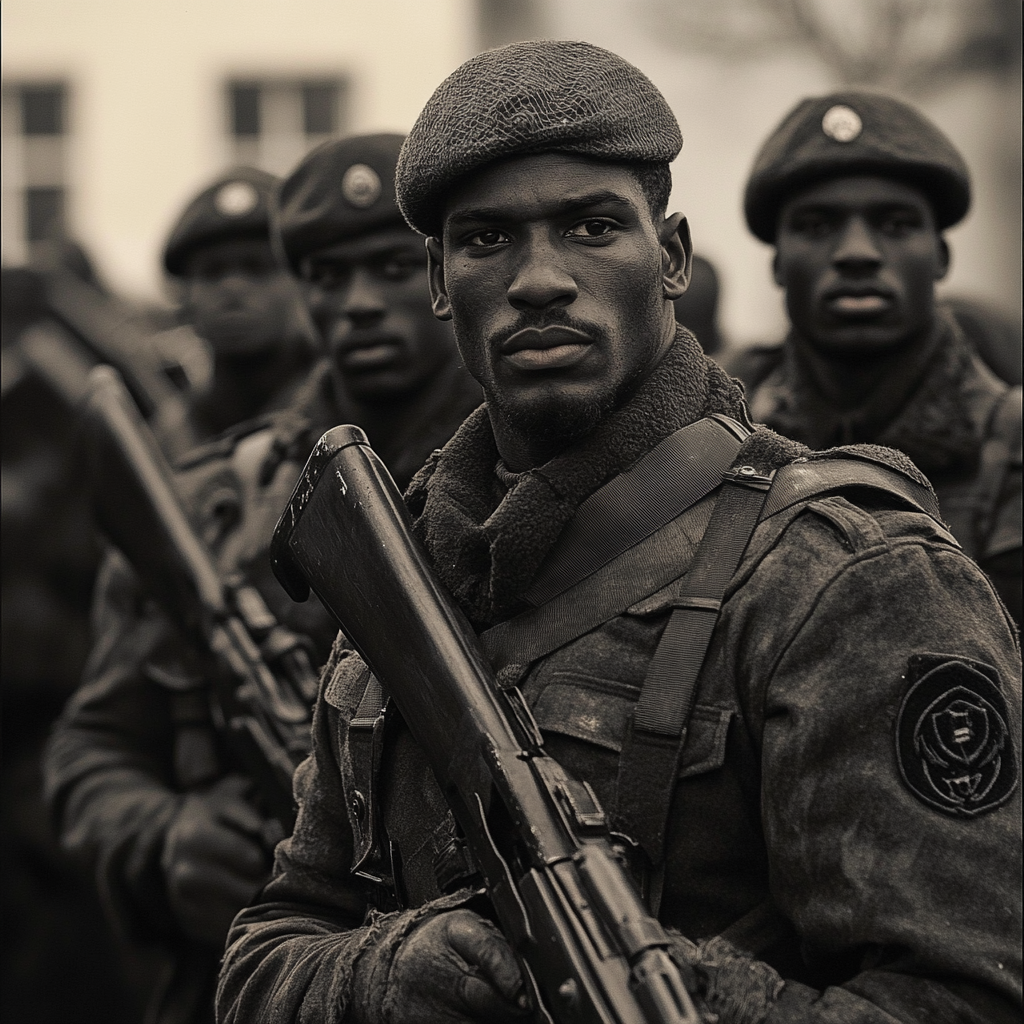
Theodor's father was considered „unfit“ to look after his four children. Theodor was therefore raised by the operators of the Völkerschau, whose interest in him lay solely in his labor. He was forced to appear as the „typical African“ from the German colonies, a role that reinforced the glorified colonial narratives of the 1920s. This upbringing not only exploited his identity, but also anchored him in a society that systematically devalued his humanity.
For Black Germans, everyday life under the Nazi regime was characterized by insecurity, surveillance and discrimination. Although Afro-Germans were not deported to concentration camps in the same systematic way as Jewish people, they were nevertheless subjected to numerous restrictions that affected their education, work and social relationships.
Schools often treated Afro-German children unequally and many were denied access to further education. Employers often refused to hire Black workers, leaving many people with limited opportunities to earn a living.
Some found work in the entertainment industry or in colonial productions in which they were supposed to embody stereotypical representations of Africans.
Others worked in physically demanding jobs or relied on informal networks within their communities.
As Nazi ideology emphasized „racial purity“, relationships between Afro-Germans and white Germans were strongly disapproved of. Authorities closely monitored such relationships and sometimes intervened to prevent them. Many Afro-Germans survived by trying to attract as little attention as possible and to conform in everyday life.
Despite these difficult circumstances, families and local communities offered support and solidarity. Personal resilience played a crucial role in overcoming the dangers of living under a racist dictatorship. Their experiences show how racism was enforced not only through laws and state measures, but also through everyday social interactions.
Despite all these challenges, Theodor survived the war and later became an important advocate for Afro-Germans.
Drawing on his experience in journalism and literature, his work explored issues of race, identity and culture in Germany. His contributions have played an important role in preserving the history and experiences of Afro-Germans and ensuring that their voices do not disappear from German historiography.
In 2021, a library in Cologne was named after him, a sign of his lasting legacy.
This library serves as a repository for the experiences and stories of Afro-Germans and promotes research on issues of identity, racism and culture from an Afro-German perspective.
The founding of the library was inspired in part by the publication of Theodor's book Mein Vater war ein Deutscher (My Father was a German), which offers a frank and impressive account of his life as a black man in 20th century Germany.
The end of the Second World War in 1945 led to the collapse of the Nazi regime, but did not immediately eliminate racism in German society. Afro-Germans who had survived the war had to rebuild their lives in a physically destroyed and politically divided country.
Many struggled with questions of identity and belonging as German society barely acknowledged their experiences during the Nazi era. In the immediate post-war years, discussions about racism and the persecution of Afro-Germans were often overshadowed by broader efforts to come to terms with the Holocaust and rebuild the country.
Some Afro-Germans found opportunities through new cultural and political movements, while others continued to experience discrimination in housing, education and the labor market.
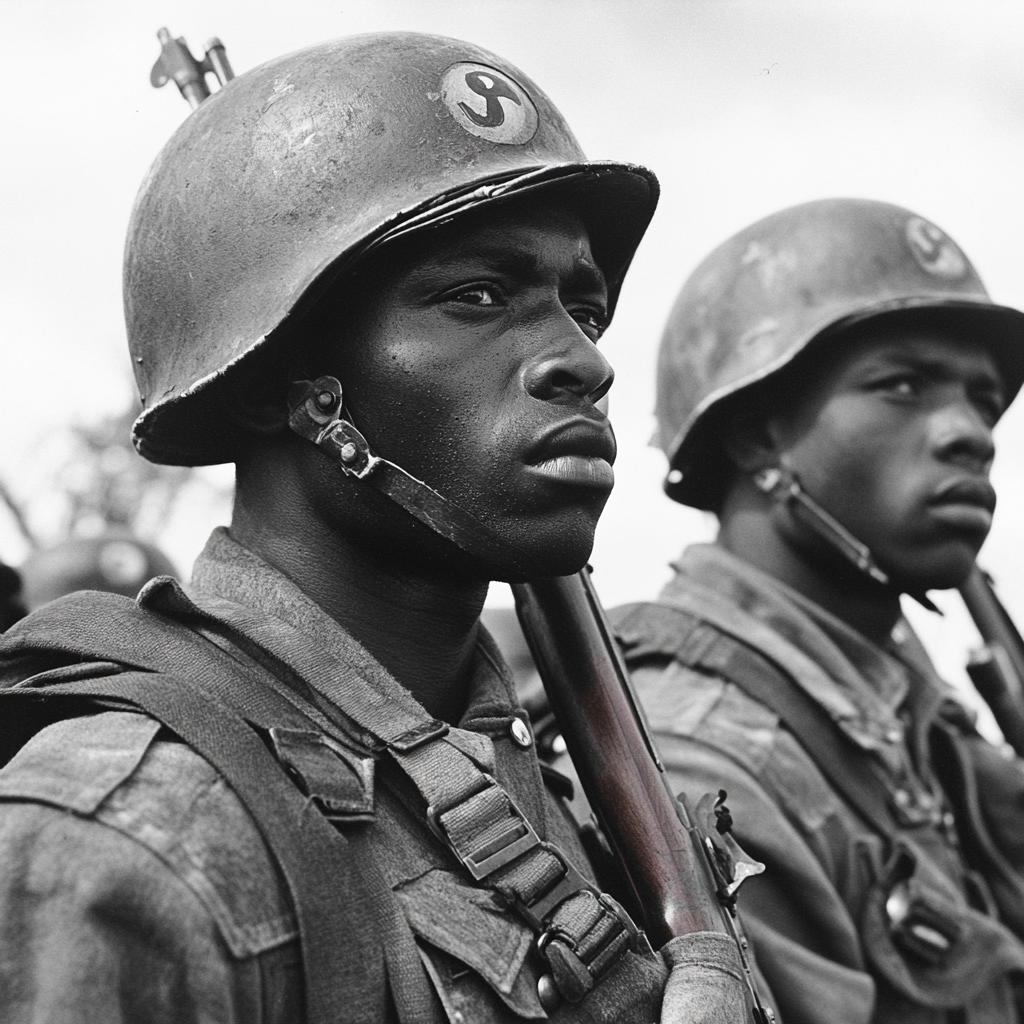
The presence of African-American soldiers in Germany after the war also influenced the perception of black identity, in some cases creating new cultural connections, but at the same time reinforcing racist stereotypes. For people like Theodor Michael Wonja, the post-war period opened up opportunities to take up professions that had previously been impossible under Nazi rule.
In the late 20th century, Afro-Germans began to fight more visibly against racism and claim their place within German society. An important milestone was the publication of Farbe bekennen in 1986, a groundbreaking book that brought together essays, interviews and historical reflections by Afro-German women.
The work played a crucial role in developing a new Afro-German self-image by encouraging people to share their experiences and network with others who had faced similar challenges.
Activists and academics also founded organizations dedicated to promoting Black culture and political education in Germany.
Theodor's story is not only a personal account of his life, but also an important approach to understanding the experiences of marginalized groups during the Nazi era. It shows how their stories were suppressed from public perception for a long time, although they are indispensable for a comprehensive understanding of history.
His resilience and commitment are a reminder of the importance of making these voices heard and recognizing their contributions to history and culture.
Remembering the history of Afro-Germans is crucial to understanding the full complexity of Germany's past. For many decades, the experiences of Black Germans were barely present in the grand historical narratives.
Textbooks and public memorials often focused on other aspects of German history, leaving little room to talk about the lives of Afro-Germans who had experienced colonialism, the Nazi era and post-war reconstruction.
In recent years, historians, museums and cultural institutions have begun to close this gap by researching and documenting Afro-German history more intensively.
The experiences of Black Germans in National Socialist Germany, visible in the life of Theodor Michael Wonja, offer an important and necessary perspective on the crimes of this time.
Their stories have often been overshadowed, but they are a testament to man's ability to survive and stand up for justice.
As we remember Theodor and others like him, we should also commit to preserving their legacies and learning from their remarkable life stories.
https://www.globaldisconnect.org/04/30/the-german-colonial-empire-seen-from-its-end/
https://www.amnesty.de/aktuell/namibia-voelkermord-deutschland-entschaedigung-ovaherero-nama
https://www.britannica.com/place/Weimar-Republic
https://encyclopedia.ushmm.org/content/en/article/afro-germans-during-the-holocaust
https://www.britannica.com/topic/Nazi-Party
https://encyclopedia.ushmm.org/content/en/article/eugenics
https://www.dw.com/en/the-forgotten-black-victims-of-the-nazi-era/a-59106666