
On April 7, 1994, the world witnessed the beginning of one of the fastest-moving genocides in human history. Within 100 days, an estimated 800,000 people lost their lives, with 70–80% of Rwanda’s Tutsi population tragically wiped out. To understand the profound impact of this crime, it is essential to examine the historical context that created the breeding ground for such a devastating event.
Before the European colonization Rwandan society was organized around a strong, centralized monarchy and a complex social structure that did not resemble modern notions of „ethnicity.“ The kingdom, ruled primarily by the Nyiginya clan, united various communities through conquest and diplomacy. The king (Mwami) was regarded not only as a political leader but also as a cultural and spiritual head, closely connected to the land and the collective identity.
Local leaders, ritual specialists, and councils supported day-to-day administration and maintained social order through customary law and shared cultural norms. Although historians acknowledge the presence of Hutu, Tutsi, and Twa, these designations were fluid and often linked to occupations, wealth, or proximity to the royal court, rather than to rigid racial categories. Wealth—for example, in the form of livestock ownership, an important symbol of prosperity—could blur distinctions between social groups. Intermarriage and shared cultural practices, including language, rituals, and trade, fostered a sense of shared identity.
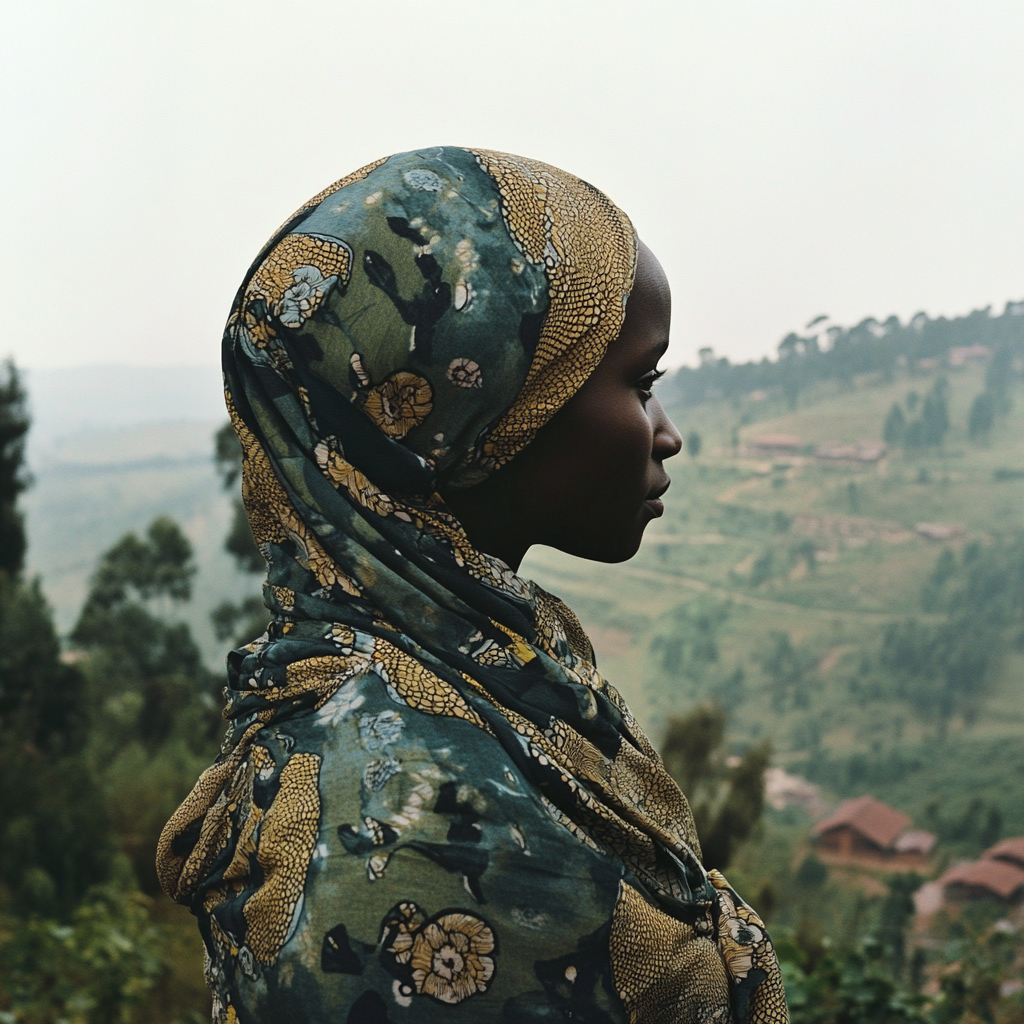
The emphasis on unity and mutual obligations contributed to relative stability, despite occasional conflicts over local power or resources. It was not until the onset of colonial rule that these flexible roles became rigid ethnic categories with political and legal consequences.
Rwanda, a country in Central Africa, was home to three main ethnic groups for centuries: the Hutu, the Tutsi, and the Twa, who coexisted peacefully for a long time. The arrival of the Tutsi in the 16th century marked the emergence of a small, cohesive kingdom. At that time, the terms „Hutu“ and „Tutsi“ were fluid and related more to social or economic status than to rigid ethnic distinctions. People shifted between these identities depending on their wealth or occupation.
However, this harmony was profoundly disrupted by European colonization in the late 19th century.
With the arrival of European powers, Rwanda’s existing social dynamics underwent a fundamental change. German colonial rule, which began in 1897, initially operated through the existing monarchy, thereby allowing for limited control and preserving local administrative structures. Later, however, German and Belgian administrators began to impose their own political and ideological frameworks and to reshape social hierarchies. The Belgians, who took over Rwanda during World War I and administered it until independence, espoused racist ideologies influenced by eugenics and the so-called „Hamitic hypothesis.“.
They favored the Tutsi minority, whom they regarded—without any basis—as superior, and placed them in administrative and educational positions, while the Hutu majority was largely excluded. One of the most enduring colonial measures was the introduction of identity cards in 1935, which officially classified individuals as Hutu, Tutsi, or Twa and enshrined these categories in law and bureaucracy.
Previously, the differences had been largely socioeconomic in nature and remained flexible. Missionaries and colonial schools reinforced these divisions by providing privileged education to the Tutsi and promoting racial stereotypes. The colonial economy also shifted toward cash crops, thereby entrenching structural inequalities in the long term.
Between 1884 and 1919, Rwanda came under German and later Belgian colonial rule. The European colonizers established a racist hierarchy that categorized the population along ethnic lines. The Tutsi, perceived as „superior,“ were favored and elevated to positions of power, while the Hutu majority was relegated to lower social positions.
The Belgians further entrenched these divisions through the identity cards of the 1930s, which solidified previously fluid distinctions and laid the groundwork for resentment and systemic inequality. The parallels to the identification methods used in Nazi Germany are alarming and highlight the profound impact of such divisive policies.
After Rwanda gained independence from Belgium on July 1, 1962, the troubled colonial legacy did not disappear; rather, it intensified and shaped national politics. The first independent government, led by President Grégoire Kayibanda and the Hutu-dominated PARMEHUTU, replaced many Tutsi elites with Hutu leadership. The Bahutu Manifesto, published in 1957, had already focused the national debate on emancipation from both colonial rule and alleged Tutsi dominance, which exacerbated ethnic tensions.
These developments led to recurring cycles of violence, marginalization, and persecution: waves of anti-Tutsi violence in the late 1950s and early 1960s forced hundreds of thousands of Tutsi into exile. These exile communities later formed the Rwandan Patriotic Front (RPF), a rebel group composed of Tutsi refugees. Sporadic political instability characterized the following decades, as shifting factions exploited ethnic identities to consolidate power.
By the late 1980s, unresolved conflicts and displaced populations had contributed to the escalation of the civil war in 1990, when the RPF invaded from Uganda. Despite peace efforts such as the 1993 Arusha Accords, extremist Hutu leaders used political obstruction and propaganda to stoke fear and hatred and set the stage for the impending genocide.
Rwanda gained independence in 1962, but the legacy of colonialism continued to shape its sociopolitical structure. Ethnic tensions simmered, as decades of discrimination had created deep rifts between the groups. Between 1959 and 1994, violence against the Tutsi occurred repeatedly. Over 100,000 Tutsi were killed during this period, and countless others were displaced, setting the stage for the catastrophic events of 1994.
The genocide in Rwanda did not occur in isolation, but rather within the context of regional and international conflicts, displacements, and geopolitical tensions. Rwanda’s neighboring countries in the African Great Lakes region—particularly Uganda, Burundi, and what was then Zaire (now the Democratic Republic of the Congo)—experienced waves of violence, authoritarian regimes, and refugee crises. Tutsi refugees established communities in Uganda and formed the RPF. Their incursion in 1990 triggered a four-year civil war against the Hutu-led government, which polarized the population.
Peace efforts such as the 1993 Arusha Accords failed because extremist Hutu factions rejected them. The assassination of President Juvénal Habyarimana in April 1994 destroyed diplomatic options and immediately triggered the genocide. International efforts, particularly UNAMIR, were understaffed and constrained by limited mandates. Despite escalating violence, the major powers hesitated to classify the events as genocide or to intervene effectively, illustrating a pattern of international inaction.
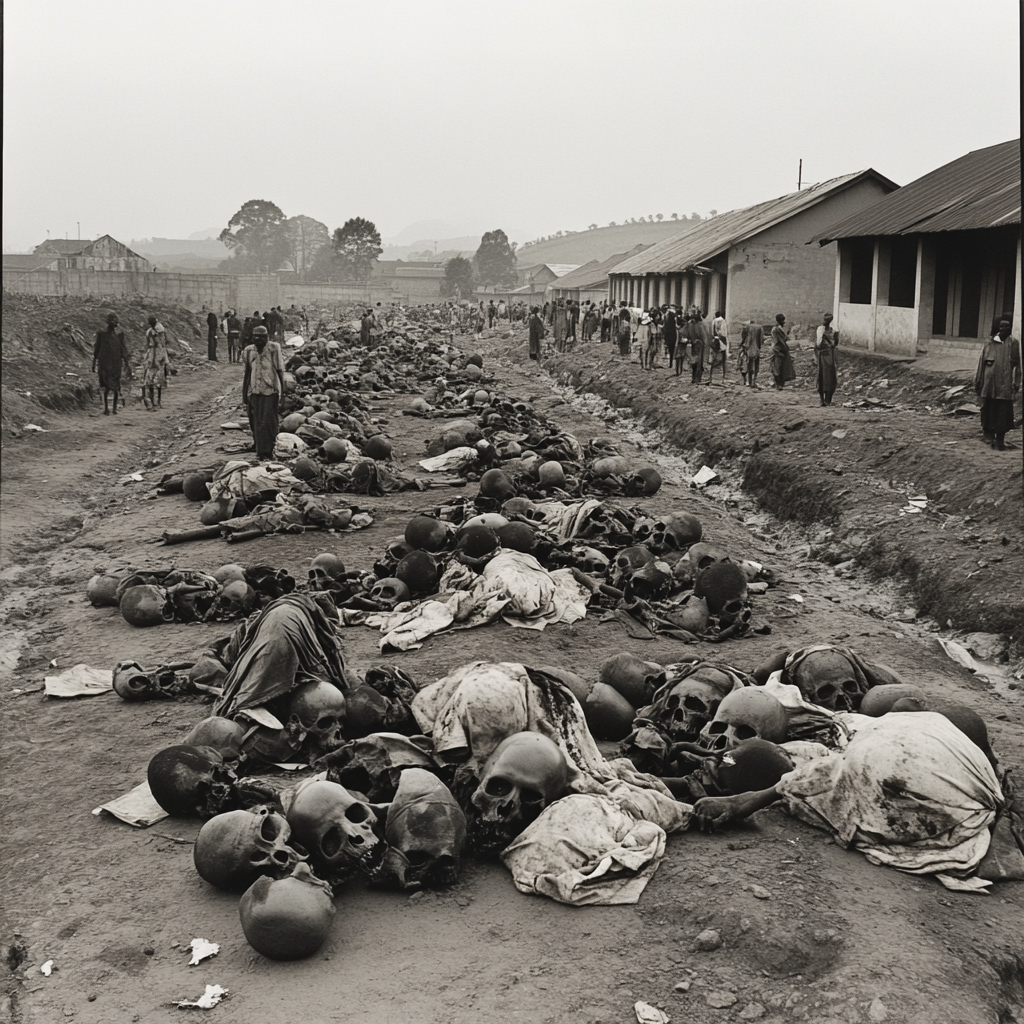
On April 6, 1994, the plane carrying President Juvénal Habyarimana and Burundian President Cyprien Ntaryamira was shot down over Kigali. Both men were killed, and the incident triggered the carefully planned genocide. Within a few hours, extremist Hutu militias and armed civilians mobilized to carry out mass killings. Even moderate Hutus were persecuted. Over the course of more than 100 days, the systematic extermination claimed the lives of approximately 800,000 people and destroyed entire communities.
One of the most powerful ways to understand genocide is through the experiences of survivors. They reveal both the immediate cruelty of the violence and extraordinary acts of courage, compassion, and resilience. Survivors recount their losses—families, friends, entire communities wiped out within hours—but also stories of people who risked their lives to save their neighbors.
These accounts bring the overwhelming numbers to life and reveal the long-term psychological wounds. They also highlight the social rupture: markets, schools, and celebrations that once bound communities together were destroyed. Survivors, including adolescents and children, offer insights into how such experiences shape identity and memory. These testimonies contribute to reconciliation efforts, a culture of remembrance, and educational programs. Institutions such as the Kigali Genocide Memorial preserve these stories as a reminder and a teaching tool.
After 1994, Rwanda faced the enormous task of delivering justice while simultaneously promoting national healing. The international tribunals were overwhelmed by the large number of suspects, which called for innovative transitional justice solutions. The International Criminal Tribunal for Rwanda (ICTR) was established in 1994 to prosecute high-ranking organizers of genocide, war crimes, and crimes against humanity.
Criticisms included the courts' remoteness, slowness, and limited access for many Rwandans. As a result, the traditional gacaca courts were revived—local tribunals focused on establishing the truth, obtaining confessions, and promoting reconciliation.
Between 2002 and 2012, nearly two million cases were heard, which helped communities come to terms with the atrocities and support victims. At the same time, national reconciliation initiatives—such as ingando camps and official memorial processes—emerged to promote unity and restore trust.
Since then, Rwanda has pursued ambitious strategies for economic, infrastructural, and social reconstruction. Vision 2020 aimed to transition from an agrarian economy to a diversified, knowledge-based society. Measures promoted the private sector, education, health care, and infrastructure development. Agriculture, technology, services, and tourism—particularly in national parks and memorial sites—have become pillars of growth. Community programs such as umuganda strengthen civic engagement and local development.
Health initiatives such as Mutuelles de Santé are expanding access to care, while educational reforms are improving literacy and labor market skills. Despite progress, challenges remain, such as regional disparities, poverty reduction, and inclusive governance. Rwanda’s economic upswing is considered one of the most significant recoveries in recent African history.
The genocide in Rwanda illustrates how historical legacies, divisive politics, and international inaction can lead to mass crimes. It has shaped global discussions on prevention, transitional justice, and collective responsibility. One of the most important lessons is the need to address historical injustices and structural inequality at an early stage. The events also highlight the consequences of international indifference, which led to reforms in international humanitarian law and peacekeeping, such as the „Responsibility to Protect“ doctrine.
Rwanda’s postwar experience shows that justice can take many forms: international tribunals, combined with community-based processes that involve both victims and perpetrators. Educational initiatives and memorials strengthen national memory and human rights. A decolonial perspective highlights how colonial history causes long-term social divisions and underscores the importance of inclusive societies. Rwanda’s history calls on international actors to remain vigilant, proactive, and committed to principles in the protection of human dignity.
By commemorating the victims of the genocide, we take on the responsibility of educating ourselves and others about this dark chapter in history. In this way, we honor the memory of those who were lost and reaffirm our commitment to a world in which such tragedies never happen again.
The history of Rwanda is a story of pain, but also of hope. It is a powerful testament to the resilience of the human spirit and the transformative power of unity and compassion.
https://en.wikipedia.org/wiki/History_of_Rwanda
https://www.royalgazette.com/other/article/20160225/black-history-month-bahutu-manifesto-1957/
https://www.pbs.org/frontlineworld/fellows/rwanda1103/context.html
https://en.wikipedia.org/wiki/Kigali_Genocide_Memorial
https://lnep.ewapub.com/article/view/12080
https://fiveable.me/africa-since-1800/unit-6/rwandan-genocide-aftermath/study-guide/eOzaql0P2Ypon48M