
Did you know that France once had the second-largest colonial empire in the world, second only to the British Empire? Although France is no longer a colonial power in the traditional sense, it still has overseas territories such as Martinique and French Polynesia.
Reexamining this history through films—especially fictionalized retellings—allows us to develop empathy for the people who lived through those times. It allows us to see them as individuals who had to make complex decisions under difficult circumstances.
France developed one of the largest colonial empires in world history, particularly beginning in the 17th century and reaching its greatest extent in the 19th and 20th centuries. This empire spanned large parts of Africa, Southeast Asia, the Caribbean, and the Pacific. Countries such as Algeria, Senegal, Vietnam, and Martinique were deeply shaped by French political control, economic exploitation, and cultural assimilation policies.
A central feature of French colonial ideology was the *mission civilisatrice*, which portrayed colonial expansion as a civilizing mission. In practice, however, colonial rule was often characterized by forced labor, unequal legal systems, cultural oppression, and the violent suppression of resistance movements.
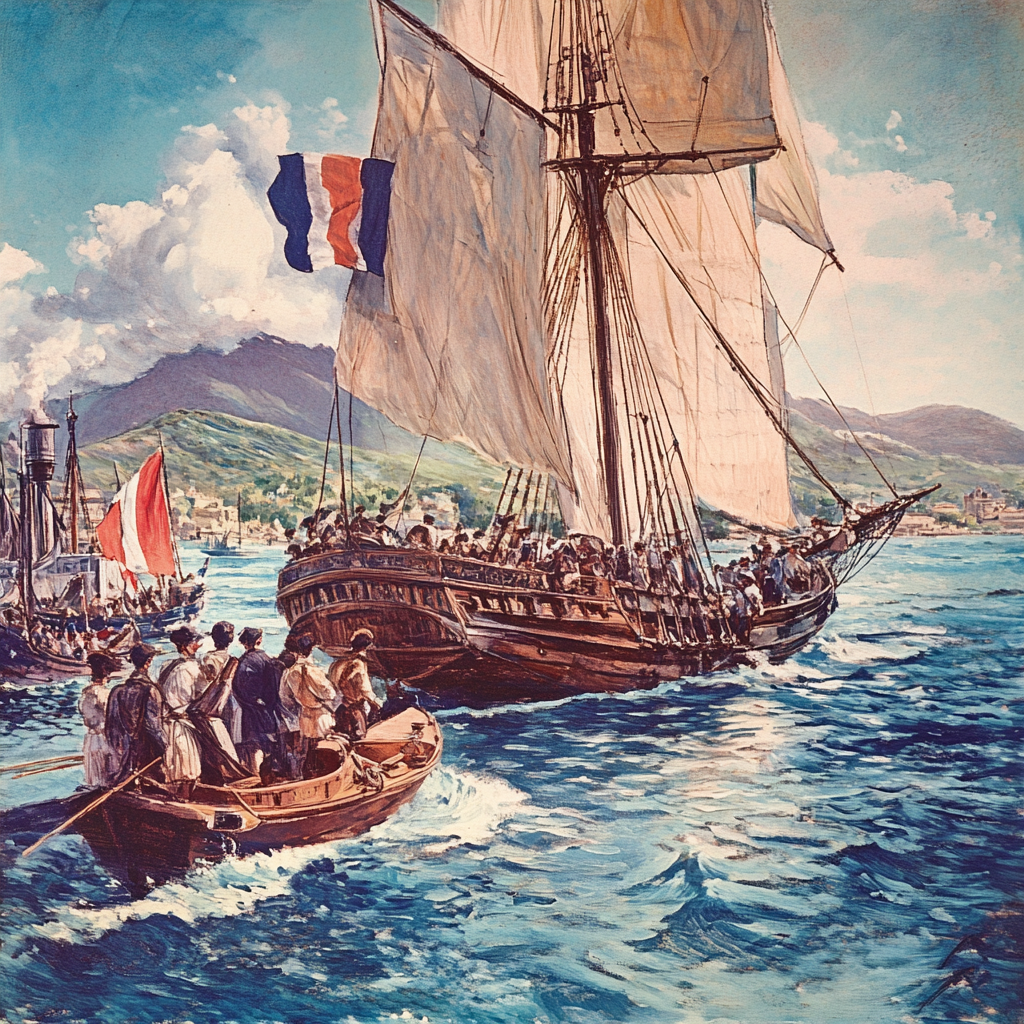
Algeria is particularly significant because it was not merely a colony but was legally integrated into France as part of its departments, which made the struggle for independence particularly intense and violent. After World War II, independence movements accelerated throughout the French colonial empire and led to the decolonization of many regions in the 1950s and 1960s. However, the end of formal colonial rule did not mean the end of colonial legacies.
Migration from former colonies to France transformed French society, particularly in urban areas. Issues of identity, inequality, and historical memory continue to shape political and cultural debates in France to this day.
This historical understanding is important for interpreting modern French films that address colonial and postcolonial themes, as many filmmakers explore how historical traumas continue to shape personal and collective identities.
Today I’d like to recommend two compelling films based on true stories or historical movements, both set in France and directed by French filmmakers of African descent. They explore the legacy of colonialism in France and its impact on communities and individuals. Let’s take a closer look at these recommendations.
"Saint Omer 2022" by Alice Diop is a powerful courtroom drama that explores themes such as motherhood, migration, language, and cultural alienation in contemporary France. The film follows a writer who attends the trial of a Senegalese-born woman accused of killing her baby.
Rather than focusing on the crime itself as a sensational event, the film carefully examines the emotional and psychological world of the defendants, as well as the difficulty of fully understanding their actions within a legal framework.
The courtroom becomes a symbolic space where the law, personal history, and cultural misunderstandings converge. The story is based on a real court case that the director witnessed firsthand, which lends the film a strong sense of realism and authenticity. Alice Diop employs a restrained visual style, long takes, and minimal dramatic music to create a documentary-like atmosphere that invites reflection rather than judgment.
One of the film’s central themes is language and its limitations. The protagonist struggles to express her inner experience in a society that does not fully understand her cultural background and emotional reality. Motherhood is also portrayed in a complex way, showing how expectations regarding maternal behavior can vary across cultures and lead to intense feelings of pressure and isolation.
More broadly, the film reflects the experiences of many migrants in France who must navigate unfamiliar legal and social systems while also grappling with personal trauma and cultural alienation. Through its quiet intensity, *Saint Omer* raises fundamental questions about empathy, judgment, and the difficulty of truly understanding another person’s life.
Rachid Bouchareb’s *Hors la loi* presents a historical narrative inspired by the Algerian struggle for independence and its impact on Algerian families in France. The film follows three brothers whose lives drift apart as they turn to different forms of resistance against colonial oppression and political conflict.
One brother becomes directly involved in the independence movement, another gets caught up in criminal activities in urban areas, and the third tries to survive amid growing social and political tensions.
Through these different narratives, the film shows how major historical events shape individual lives in unequal and often tragic ways. The Algerian War of Independence, which lasted from 1954 to 1962, was marked by extreme violence, including guerrilla warfare, military repression, and widespread suffering among the civilian population.
French colonial rule in Algeria lasted more than a century and was marked by profound structural inequality and the political marginalization of the local population.
The film uses stylistic elements often associated with gangster films and Westerns—such as tense confrontations, urban landscapes, and intense moral conflicts—to depict the complexity of resistance and survival. At the same time, it challenges dominant historical narratives in France by focusing on the perspectives of Algerian characters and their experiences of colonial violence.
This approach sparked intense debate in France, as the film addresses unresolved tensions surrounding national memory and historical responsibility. By focusing on family relationships, the film also shows that political conflict is never abstract, but always deeply personal.
Alice Diop and Rachid Bouchareb are two prominent filmmakers whose works explore the legacy of French colonial history and its ongoing impact on contemporary society. Alice Diop was born in France to Senegalese parents and initially worked in documentary film, focusing on everyday life in the suburbs and the experiences of marginalized groups.
Her transition to feature films with *Saint Omer* reflects her ongoing interest in real-life stories and social realities, particularly as they relate to migration, identity, and belonging. Her cinematic style is often characterized by observation, restraint, and emotional precision, rather than dramatic exaggeration. Rachid Bouchareb, a French-Algerian director, has devoted much of his career to exploring the relationship between France and Algeria, both during the colonial era and afterward.
His films often highlight the perspectives of Algerians and their descendants and address themes such as exile, resistance, and historical memory. In contrast to traditional historical narratives, which present the viewpoint of the former colonial power While placing the focus on this, his work attempts to balance the narrative by highlighting voices that have historically been marginalized or excluded
Together, these two directors represent different but complementary approaches to postcolonial storytelling. Diop focuses more on contemporary psychological and social experiences, while Bouchareb deals more directly with historical events and political resistance. Both, however, challenge dominant narratives and push the boundaries of French cinema by introducing alternative perspectives on history and identity.
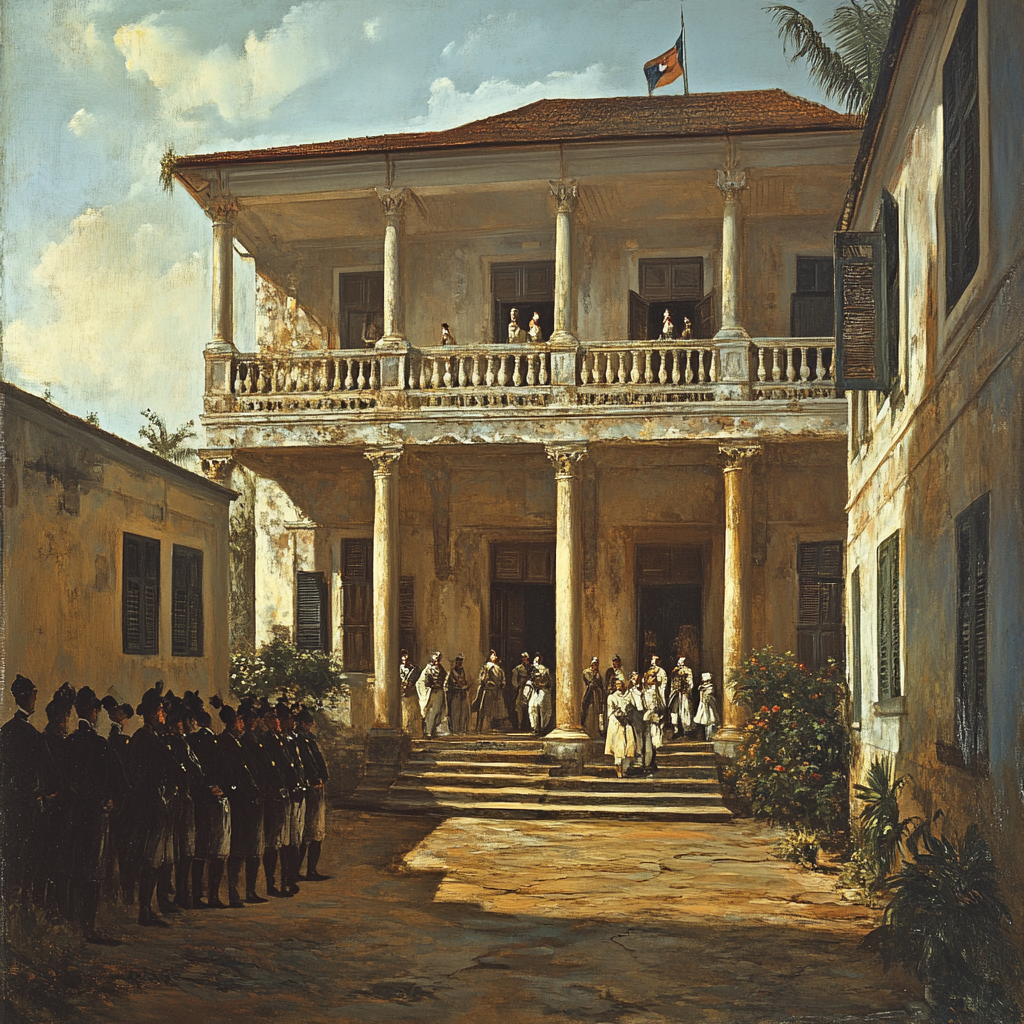
Although *Saint Omer* and *Hors la loi* differ greatly in genre, setting, and narrative structure, both films deal extensively with the legacy of French colonial history and its impact on individuals and communities. *Saint Omer* is set in present-day France and uses a courtroom as its setting to explore the psychological and emotional dimensions of migration, motherhood, and alienation.
Hors la loi, on the other hand, is set during the Algerian War of Independence and presents a historical narrative that focuses on political resistance and violence.
Despite these differences, both films explore how individuals are shaped by power structures that lie beyond their personal control. In *Saint Omer*, this is expressed through silence, legal language, and emotional distance, while in *Hors la loi*, it is conveyed through conflict, action, and political struggle. Another important commonality is the theme of fragmented identity.
Characters in both films grapple with a sense of belonging, whether due to cultural uprooting in a foreign society or ideological divisions resulting from war and exile. Both films also challenge official historical narratives by presenting perspectives that are often underrepresented in mainstream French culture.
They encourage the audience to question how history is told, who is allowed to tell it, and how personal experiences are intertwined with collective memory. In this way, both films contribute to a broader rethinking of French identity in relation to its colonial past.
Postcolonial theory is an academic field that examines the long-term effects of colonialism on societies, cultures, and individual identities. It argues that colonial power structures do not simply disappear after independence, but continue to influence political systems, cultural representations, and social inequalities.
One of its central ideas is that history is perspectival, meaning that different groups can interpret the same events very differently, depending on their position within power structures. Film is a particularly powerful medium for exploring these dynamics, as it combines narrative, visual representation, and emotional impact. In the context of French cinema, postcolonial perspectives have become increasingly important as filmmakers address themes such as migration, racism, cultural memory, and historical trauma.
Films become spaces where suppressed or marginalized voices can be heard and alternative historical narratives come to light. This is particularly relevant in the context of former French colonies, where the legacy of colonialism continues to shape social and political realities. By addressing postcolonial themes, films such as *Saint Omer* and *Hors la loi* do more than simply tell individual stories.
They engage with broader cultural debates about identity, responsibility, and historical memory. They invite audiences to reflect on how the past continues to influence the present and how cinema can contribute to a deeper understanding of history beyond official narratives.
https://necsus-ejms.org/poetics-of-refraction-black-subjectivity-and-alice-diops-saint-omer/
https://www.bpb.de/themen/kolonialismus-imperialismus/
https://www.britannica.com/topic/Western-colonialism/The-French
https://www.bpb.de/themen/europa/frankreich/505860/der-algerienkrieg/
https://www.imdb.com/name/nm4629833/
https://www.criterion.com/current/posts/8422-saint-omer-shades-of-motherhood