
Experiences of homosexuality in East Germany (GDR) and West Germany (Federal Republic) were shaped by different political, social, and cultural contexts. While both regions faced challenges, their approaches to LGBTQ+ rights and social acceptance differed significantly.
Even before Germany was divided into East and West, the history of homosexuality had already been marked by dramatic fluctuations between relative openness and brutal repression. During the Weimar Republic, Germany—especially Berlin—was considered one of the most progressive places in the world for LGBTQ+ people. A vibrant queer culture flourished, with bars, clubs, publications, and advocacy organizations in urban centers. A central figure of this era was Magnus Hirschfeld, founder of the Institute for Sexual Science in Berlin.
Hirschfeld advocated for sexual diversity and fought against Paragraph 175, thereby contributing to the LGBTQ+ movement from an early stage. However, this progress was violently reversed in 1933 when the Nazis came to power. The Nazis not only destroyed Hirschfeld’s institute but also intensified the enforcement of Paragraph 175, leading to the persecution, imprisonment, and murder of thousands of gay men. Many were sent to concentration camps, where they were forced to wear the pink triangle as a mark of their identity.
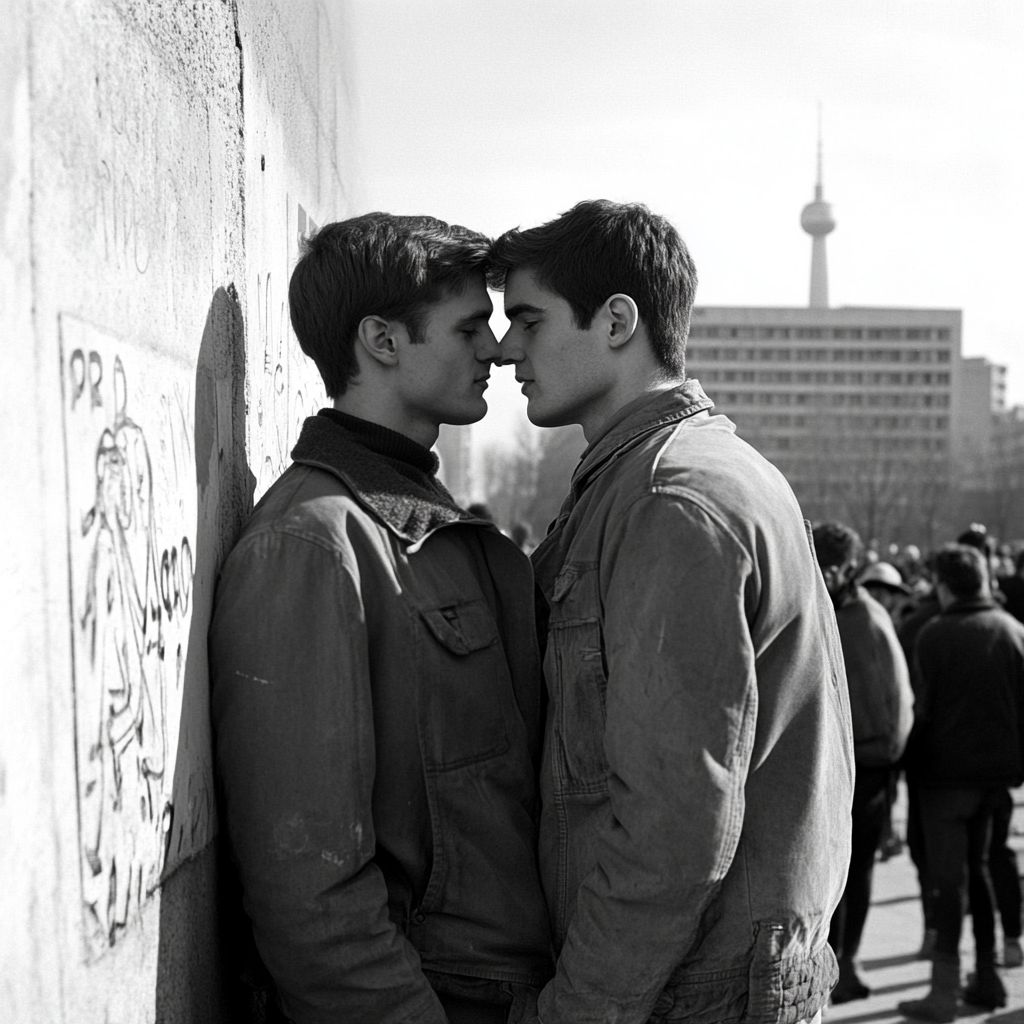
This legacy of repression had a profound impact on postwar Germany and laid the groundwork for legal and social hostility that persisted in both German states after 1945.
The Section 175 of the German Criminal Code played a central role in shaping the lives of LGBTQ+ people in East and West Germany. Introduced in 1871, the law criminalized sexual acts between men and reflected the moral standards of Europe at the time. Under the Nazi regime, the law was significantly tightened in 1935 by broadening the definition of criminal acts, which made prosecutions easier and more frequent. After World War II, both East and West Germany initially retained the law, but their approaches later diverged.
In West Germany, the Nazi interpretation remained in effect for decades, leading to tens of thousands of convictions in the postwar period and illustrating the continuity of legal discrimination following the collapse of the Nazi regime. In contrast, the GDR gradually moved away from the stricter Nazi interpretation and finally decriminalized homosexuality in 1968. However, earlier convictions and the enduring stigma continued to influence public perception in both societies.
In the GDR, homosexuality was decriminalized in 1968, earlier than in many states of the Federal Republic of Germany. However, this legal change did not lead to widespread social acceptance. The socialist government promoted a conservative, heteronormative family model, and homosexuality remained a taboo subject. LGBTQ+ individuals faced significant social stigma and discrimination, without any legal protection against prejudice.
In West Germany, however, the notorious Paragraph 175 remained in effect—a Nazi-era law that criminalized homosexual acts between men. Although the law was amended in 1969, it was not fully repealed until 1994. This delay meant that the legal persecution of LGBTQ+ people there lasted decades longer than in the GDR.
Beyond the legal framework, the daily experiences of LGBTQ+ people in both German states were shaped by social expectations and the need for discretion. Many people hid their identity to avoid discrimination, which often led to isolation and psychological stress. In the GDR, social conformity was strongly emphasized, and deviations from heteronormative family ideals could result in exclusion from professional and social opportunities.
In West Germany, legal reforms did gradually reduce criminal prosecutions, but social attitudes remained conservative for decades. Many lived out their identities in private, relying on trusted networks rather than public visibility. These everyday experiences show that legal changes did not automatically lead to social acceptance, and that LGBTQ+ people had to continually negotiate their visibility and safety.
In East Germany, government control extended to many aspects of private life. The Stasi maintained extensive surveillance systems that monitored citizens, including those deemed to be engaging in non-conforming behavior. Although homosexuality was no longer illegal after 1968, it continued to be regarded as incompatible with socialist ideals. LGBTQ+ individuals could therefore be monitored—not necessarily for the purpose of persecution, but as a means of social control.
Informants within the communities contributed to an atmosphere of mistrust, making it difficult to form stable networks. Surveillance often operated indirectly, shaping behavior through fear rather than overt punishment. This environment limited opportunities for open self-expression and exacerbated the marginalization of LGBTQ+ individuals in the GDR.
In the GDR, LGBTQ+ people had only limited spaces available for socializing and building a sense of community. The number of queer bars and gathering places declined compared to the Weimar Republic and the 1880s. The government’s emphasis on heteronormativity exacerbated the marginalization of LGBTQ+ identities.
In West Germany, on the other hand, a more visible LGBTQ+ movement emerged beginning in the 1970s. Organizations such as Homosexuelle Aktion Westberlin (HAW), founded in 1971, advocated for rights and social acceptance. More spaces for socializing and community formed, including bars, clubs, and cultural centers, which enabled a level of visibility and networking that was lacking in the GDR.
Urban environments, particularly in western Germany, played a crucial role in the visibility and identity formation of LGBTQ+ people. Cities like Berlin became centers of queer culture, where social spaces facilitated connection and self-expression. Neighborhoods like Schöneberg gained prominence as LGBTQ+ hubs, offering places that combined social interaction with political awareness.
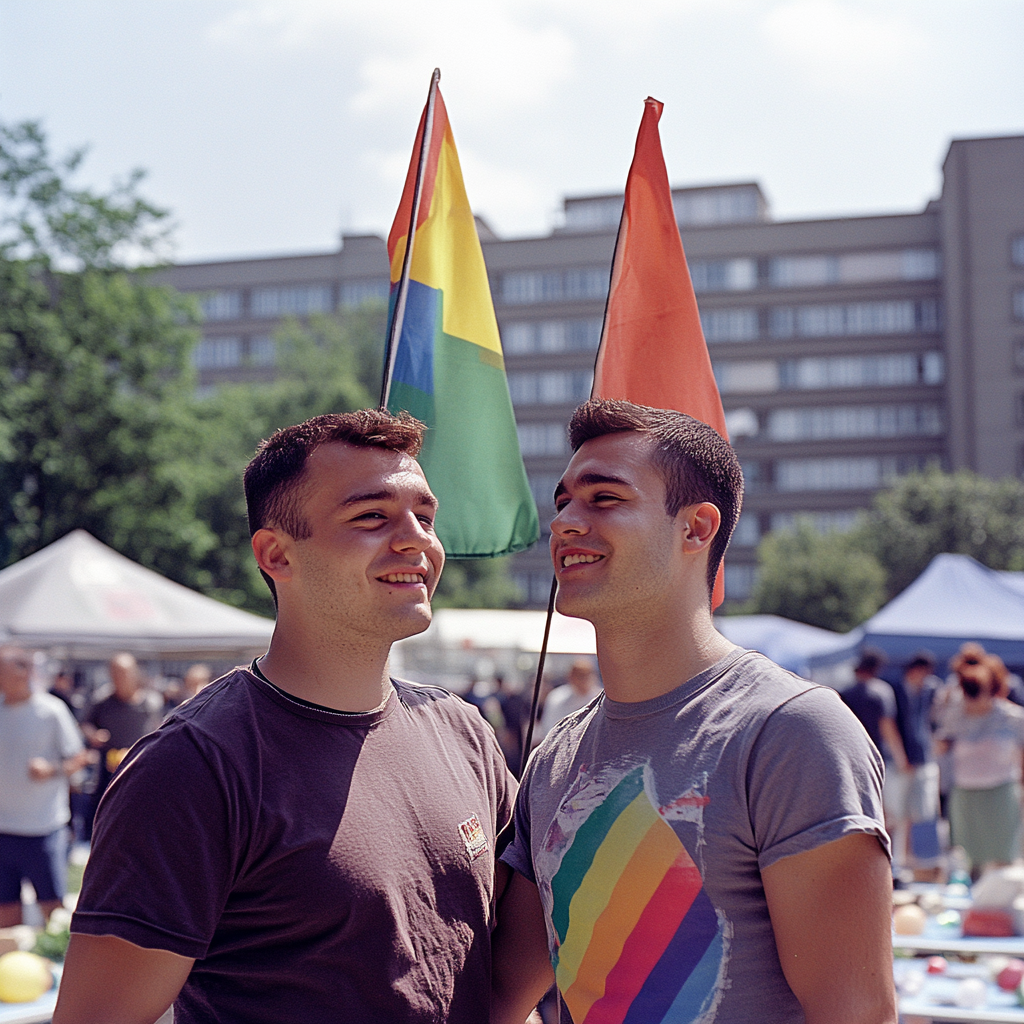
These spaces contributed to the formation of collective identities and activism. In the GDR, there was no comparable public infrastructure, and queer life remained largely private or organized within protected groups such as church congregations. This difference illustrates how access to physical and social spaces influenced the development of LGBTQ+ communities.
The experiences of lesbian women in East and West Germany differed from those of gay men, as female homosexuality was not explicitly criminalized under Paragraph 175. However, this did not mean that it was socially accepted. Lesbian relationships often remained invisible or were ignored. In the GDR, women’s participation in the workforce was encouraged, but heterosexual family models continued to dominate.
In West Germany, lesbian groups gained greater visibility through their connections to feminist movements, which created spaces for political and social engagement. Despite these developments, lesbian perspectives often remained underrepresented within the broader LGBTQ+ narrative, underscoring the importance of gender-specific considerations in queer history.
In the GDR, scientific studies often reflected heteronormative ideologies. Among other things, research and education advocated hormone treatments for children to „prevent“ homosexuality. These practices underscored the social stigmatization of LGBTQ+ people, even after decriminalization.
In West Germany, activism and visibility led to gradual changes in social attitudes, which in turn challenged outdated scientific and cultural narratives.
The emergence of HIV/AIDS in the 1980s had a significant impact on LGBTQ+ communities, particularly in West Germany. The crisis intensified stigmatization, as homosexuality was associated with illness in the public perception. At the same time, it led to increased organization and activism, as communities became involved in education, prevention, and support.
Public awareness campaigns improved understanding and fostered more open conversations about sexuality. In the GDR, the tightly controlled media landscape limited public discussion, so the reaction was heavily influenced by the restricted flow of information. The crisis thus served as both a catalyst for visibility and a source of new challenges for LGBTQ+ people.
The fall of the Berlin Wall in 1989 marked a turning point and opened up new opportunities for LGBTQ+ activism in both regions. However, the transition brought its own challenges. East Germans had to integrate into a new social structure that was often unfamiliar and fraught with prejudice. West Germany, with its established LGBTQ+ movement dating back to the 1970s and 1980s, provided a visible platform for activism. Reunification brought these different historical developments together, creating both opportunities and cultural challenges.
Ideological frameworks in both German states influenced societal attitudes toward homosexuality. In West Germany, religious traditions played an important role in moral judgments, often with a conservative outlook on sexuality. Although the GDR promoted a secular, socialist ideology, it continued to emphasize conformity with traditional family structures. Interestingly, religious institutions in East Germany occasionally provided limited spaces for alternative communities, illustrating the complex relationship between ideology, morality, and social practice.
After reunification, Germany underwent significant legal changes in the area of LGBTQ+ rights. The repeal of Paragraph 175 in 1994 ended legal criminalization. Subsequent reforms led to the legal recognition of same-sex partnerships and expanded anti-discrimination protections. Over time, these developments contributed to greater legal equality, while social acceptance continued to evolve. The post-reunification era marks a transition toward formal inclusion, yet it also reflects the lingering effects of past divisions.
While the GDR had decriminalized homosexuality earlier, social acceptance lagged behind, and activism was minimal. Legal reforms in West Germany took longer, but the region saw a more robust and visible LGBTQ+ movement. German reunification opened up new opportunities and improved conditions for activism, but it also brought challenges related to integration and cultural adaptation.
Dive into Berlin's colonial heritage! Reserve your spot now on our exclusive Decolonial Tour of Schöneberg !
https://encyclopedia.ushmm.org/content/en/article/gay-men-under-the-nazi-regime
https://www.hirschfeld.in-berlin.de/institut/en/
https://www.deutschlandfunk.de/homosexuelle-der-paragraf-175-und-seine-juristische-100.html
https://www.bpb.de/themen/gender-diversitaet/homosexualitaet/
https://www.dw.com/en/east-germany-spy-agency-stasi-surveillance/a-73491436
https://www.berlin.de/kultur-und-tickets/queer/
http://fes.de/themenportal-gender-jugend/gender/news-seite
https://www.unaids.org/en/resources
https://www.hrw.org/news/2013/12/12/germany-and-marriage-equality