
Let's consider the difference between equality and justice. Equality—that is, the idea of treating everyone the same—sounds like it would solve all problems, doesn't it? But as we’ll see, true fairness often requires more than just equal treatment. This brings us to the origins of feminism and how it has evolved over time.
Equality and justice are often used interchangeably, but they represent fundamentally different approaches to fairness. Equality means giving everyone the same resources, opportunities, or treatment, regardless of their starting point. At first glance, this seems fair because everyone is treated identically. However, this approach ignores the fact that people start from very different social, economic, and cultural backgrounds. Equity, on the other hand, focuses on recognizing these differences and tailoring support accordingly so that outcomes can be more balanced.
For example, equality in education would mean that every student receives the same textbook and the same amount of class time, while equity takes into account that some students need additional language support, tutoring, or financial assistance to achieve similar outcomes. Equal treatment can actually exacerbate inequality when structural barriers exist. Factors such as family income, access to education, and social networks shape opportunities long before people enter institutions such as schools or workplaces.
Justice, therefore, aims to eliminate structural disadvantages rather than simply ignoring them. This distinction is crucial because measures based solely on equality can overlook hidden disadvantages and perpetuate existing hierarchies. In contrast, equity seeks to create conditions under which people can actually succeed based on their abilities, rather than their circumstances.
This understanding is essential for discussions about feminism, education, and social justice, as it shows why equal treatment is not always the fairest or most effective solution.
Feminism began in 1848, when women fought for the right to vote, better access to education, and control over their own bodies. But why did women need these rights in the first place? In Eurocentric societies, only two genders were recognized—male and female—which shaped laws, customs, and expectations. At the same time, many cultures in Africa, Asia, and among indigenous communities recognized more than two genders.
European missionaries often worked to replace these diverse beliefs with Christianity, which imposed a rigid binary system that placed men above women. Ironically, this meant that even white women experienced oppression in these societies.
The history of feminism is often divided into four waves, each reflecting different priorities and social contexts. The first wave, which began in the late nineteenth century, focused primarily on legal rights such as the right to vote, property rights, and access to education. This movement achieved significant milestones, including women’s suffrage in many countries.
The second wave, which emerged in the mid-twentieth century, broadened the focus to include labor rights, reproductive freedom, and social equality. During this phase, issues such as unequal pay, discrimination, and gender roles within the family were addressed.
The third wave, which began in the 1990s, introduced a more critical perspective on identity and emphasized diversity as well as the experiences of women from different racial, cultural, and social backgrounds. It challenged the notion that all women share the same problems.
The fourth wave, which continues to this day, is strongly characterized by digital activism and global communication and draws attention to issues such as sexual harassment and gender-based violence.
This development shows that feminism has never been static, but has constantly adapted to new social realities. Each wave builds on the previous one while also addressing its limitations, which is why modern feminism increasingly focuses on inclusion and structural inequality—and not just on legal equality.
Gender is not understood in the same way across all cultures, and a look at global perspectives shows that the binary view of male and female is not universal. Historically, many societies recognized more than two gender identities, and these identities were often integrated into social and cultural systems. However, colonialism and the spread of European norms contributed to the global dominance of binary gender systems.
A comparison of different countries also shows that gender roles and expectations depend heavily on cultural, economic, and political contexts. In some societies, gender roles are more flexible, while in others they remain strongly tied to tradition. These differences illustrate that gender is not simply a biological fact, but is shaped by social and historical influences.
Understanding global perspectives helps us challenge the assumption that existing gender systems are natural or inevitable. It also highlights the importance of learning from diverse cultural practices in order to develop more inclusive approaches to equality.
By recognizing that gender is experienced differently in different societies, discussions about feminism can move beyond narrow ways of thinking and take into account a wider variety of experiences and solutions.
Feminism strives to achieve equality in the rights, decision-making, and opportunities of men and women, at least within white-dominated societies. White women first gained the right to vote in 1838 on Pitcairn Island, access to education in 1803 in Massachusetts, and access to many jobs after World War I. Today, equal pay remains a major issue, but countries such as Germany have made significant progress toward gender equality.
Despite significant progress, gender inequality remains a persistent problem in modern societies, especially in the labor market. One of the most visible indicators is the gender pay gap, which reflects differences in the earnings of men and women. On average, women often earn less than men, even when factors such as education and work experience are taken into account.
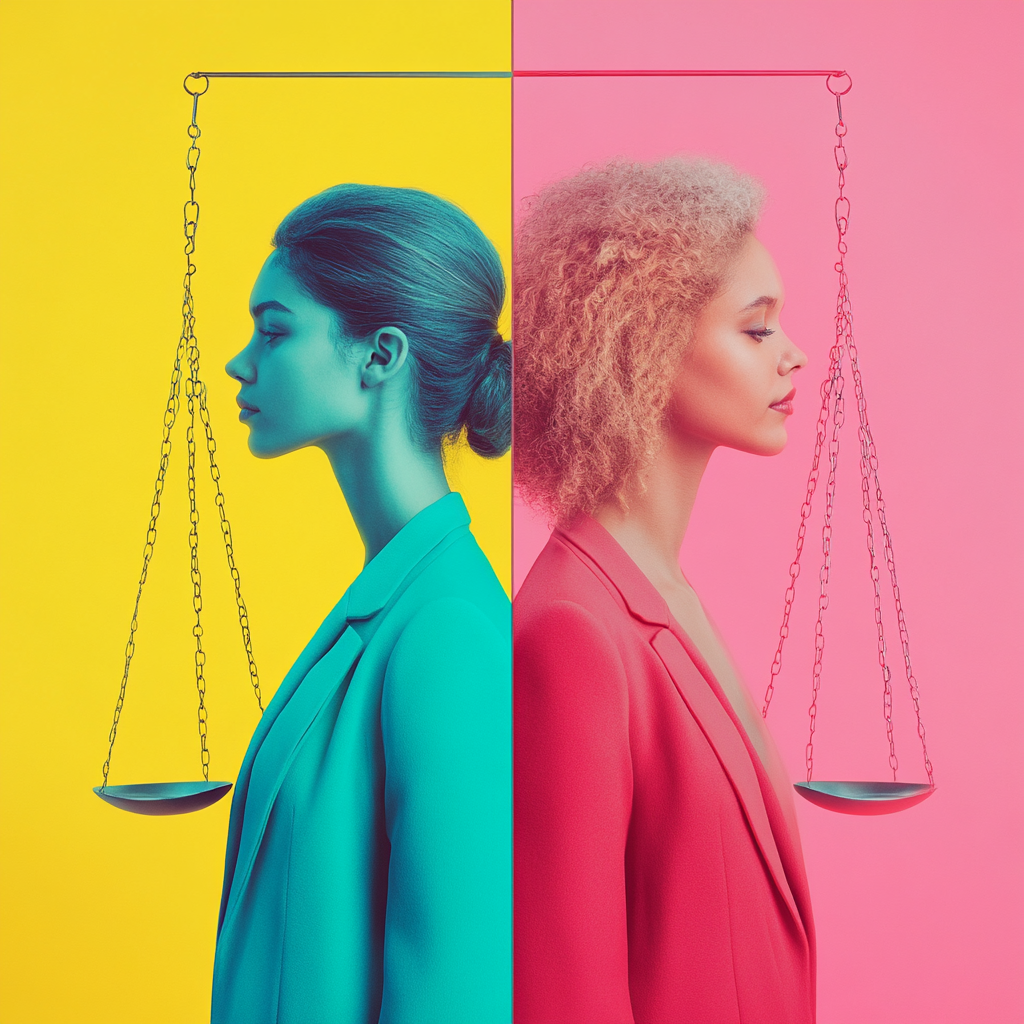
Although this gap has narrowed over time, it has not disappeared and varies by industry and employment level. Structural factors such as occupational segregation, part-time work, and career breaks due to caregiving responsibilities play a major role in perpetuating these inequalities. Furthermore, women are underrepresented in leadership positions, which limits their influence on decision-making processes and reinforces existing disparities.
These patterns show that inequality is not simply the result of individual decisions, but is closely linked to social expectations and institutional structures. Addressing gender inequality therefore requires more than equal treatment. It requires changes to the systems that shape opportunities, including workplace policies, cultural norms, and access to resources. Without these deeper changes, equality remains incomplete.
Here's the catch: Traditional feminism, sometimes referred to as "white feminism," has often overlooked other marginalized groups. It does not necessarily include people who are non-binary or transgender, or who come from different ethnic backgrounds.
In addition, people who experience multiple forms of discrimination at the same time—such as women with immigrant backgrounds, people with disabilities, or members of the LGBTQ+ community—are often overlooked. Feminism began as a movement to achieve equality, but its focus was often limited.
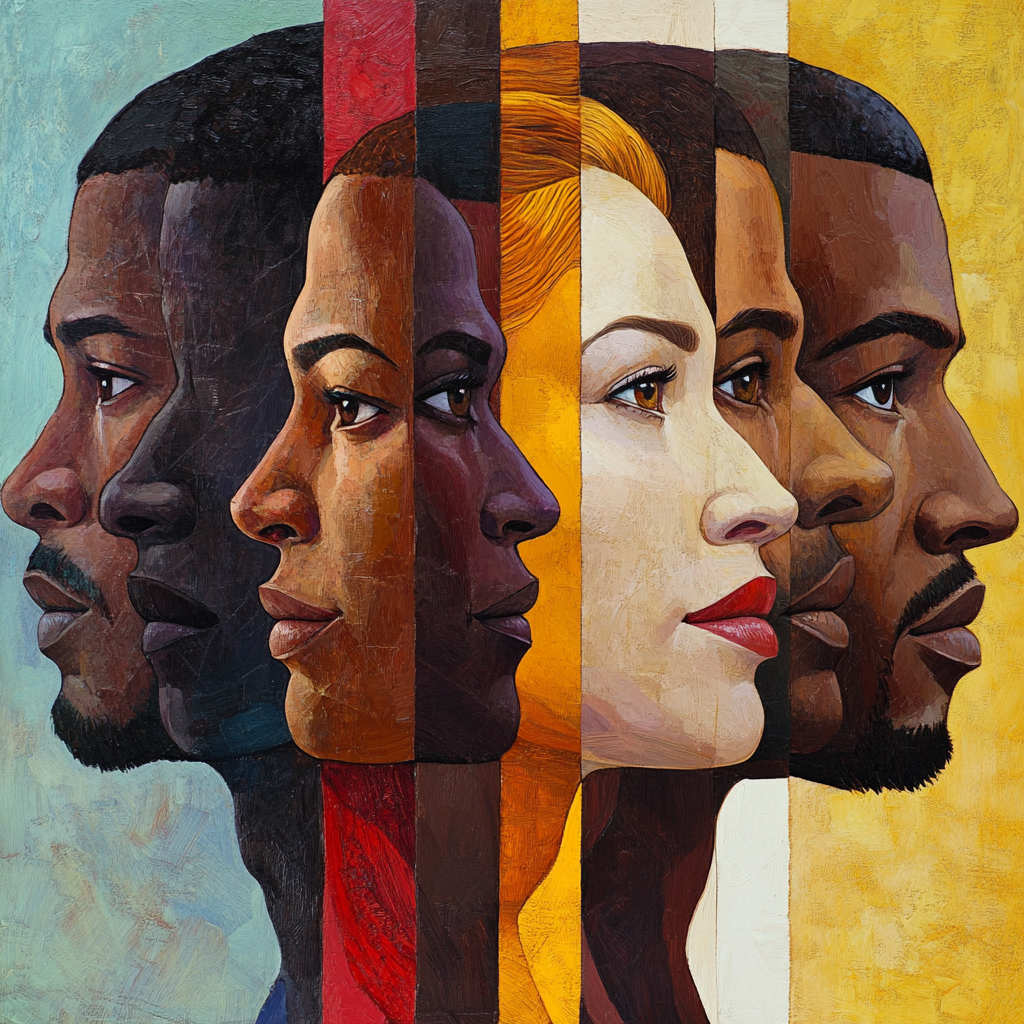
Intersectionality is a concept that helps explain how different forms of inequality interact and overlap. Rather than viewing issues such as gender, ethnicity, social class, or sexuality in isolation, intersectionality recognizes that these identities are interconnected and shape people’s experiences in complex ways.
For example, a woman may experience discrimination based on her gender, while a woman with an immigrant background may face additional challenges related to ethnicity and social status. This means that inequalities cannot be fully understood by considering just one factor. Instead, they must be analyzed as part of a larger system of intersecting influences. Intersectionality makes it clear that social categories influence one another and create unique experiences of advantage or disadvantage.
In practice, this means that measures focused solely on gender equality may fail to address deeper inequalities faced by certain groups. An intersectional perspective makes it possible to bring these hidden layers to light and develop more inclusive solutions. This approach has become increasingly important in contemporary feminist discourse because it recognizes diversity within groups and challenges simplistic notions of equality.
Criticism of so-called "white feminism" centers on the idea that mainstream feminism has historically prioritized the experiences and concerns of white, middle-class women, while the needs of other groups have often been overlooked. This criticism argues that such an approach can unintentionally exclude people who face additional discrimination based on race, social class, sexuality, or disability.
For example, measures to improve gender equality in the workplace may primarily benefit women who already have access to stable employment, while making little difference for people in precarious living situations. Without taking these differences into account, progress toward equality remains limited. Critics therefore call for a more inclusive feminism that acknowledges different life realities and addresses multiple forms of inequality simultaneously.
This also involves involving marginalized voices more fully in decision-making processes. By broadening its focus, feminism can better fulfill its goal of creating justice for all. This shift in perspective reflects a broader understanding of equality that goes beyond equal treatment and instead emphasizes the importance of specific needs and barriers.
Equity plays a central role in the education system and in society as a whole, as it directly influences whether people have access to opportunities and can succeed. In education systems, students come from diverse backgrounds with varying levels of support, resources, and prior knowledge. Providing the same resources to everyone fails to account for these differences and can lead to unequal outcomes.
For example, students from low-income families or with an immigrant background often face additional challenges, such as limited access to learning materials or language barriers. Equity-oriented approaches seek to level the playing field by providing targeted support, such as tutoring, financial aid, or language support programs. This not only benefits individuals but also contributes to a more inclusive and productive society. Beyond education, equity is also of great importance in areas such as health, employment, and social policy.
People with limited access to resources are more likely to face poorer living conditions and have fewer opportunities for economic success. Reducing these inequalities requires measures that address the specific needs of different groups, rather than applying one-size-fits-all solutions. By prioritizing equity, societies can work to dismantle structural inequalities and create conditions in which all people can reach their full potential.
So, where do we go from here? Equity means understanding that different people face different barriers and providing them with the specific support they need. While equality means giving everyone the same resources, equity means giving each person the resources they need to succeed.
Feminism has achieved a great deal, but to truly support all genders and identities, it must go beyond equal treatment and actively create justice.
Thank you for sticking with me this far! There's a lot to think about, but it's precisely this understanding that helps us move toward a more inclusive world.
If you'd like to learn more about Black and queer feminism, come About Our Tour!