
Colonialism was a period characterized by strict control and a clear power structure imposed by the colonial powers. This power manifested itself in various ways—economically, politically, socially, and even spiritually. Let’s take a closer look at how each of these aspects influenced the colonies and continues to leave its mark on the world to this day.
Colonialism developed over several centuries and was driven by a combination of economic ambition, political competition, and religious motivation. Beginning in the late fifteenth century, European powers such as Portugal and Spain initiated overseas expansion during what is often referred to as the Age of Discovery.
Their goal was to find new trade routes, gain access to valuable resources, and spread Christianity. As maritime technology improved, other powers—such as Great Britain, France, and Belgium—joined the competition for overseas territories.
Colonies were established in the Americas, Africa, and Asia, often through conquest and settlement. This expansion was justified by ideologies such as the belief in European superiority and the so-called “civilizing mission,” which claimed that colonization would bring progress to indigenous populations. In reality, colonialism destroyed existing societies, economic systems, and governmental structures. It also laid the foundation for global inequalities that persist to this day.
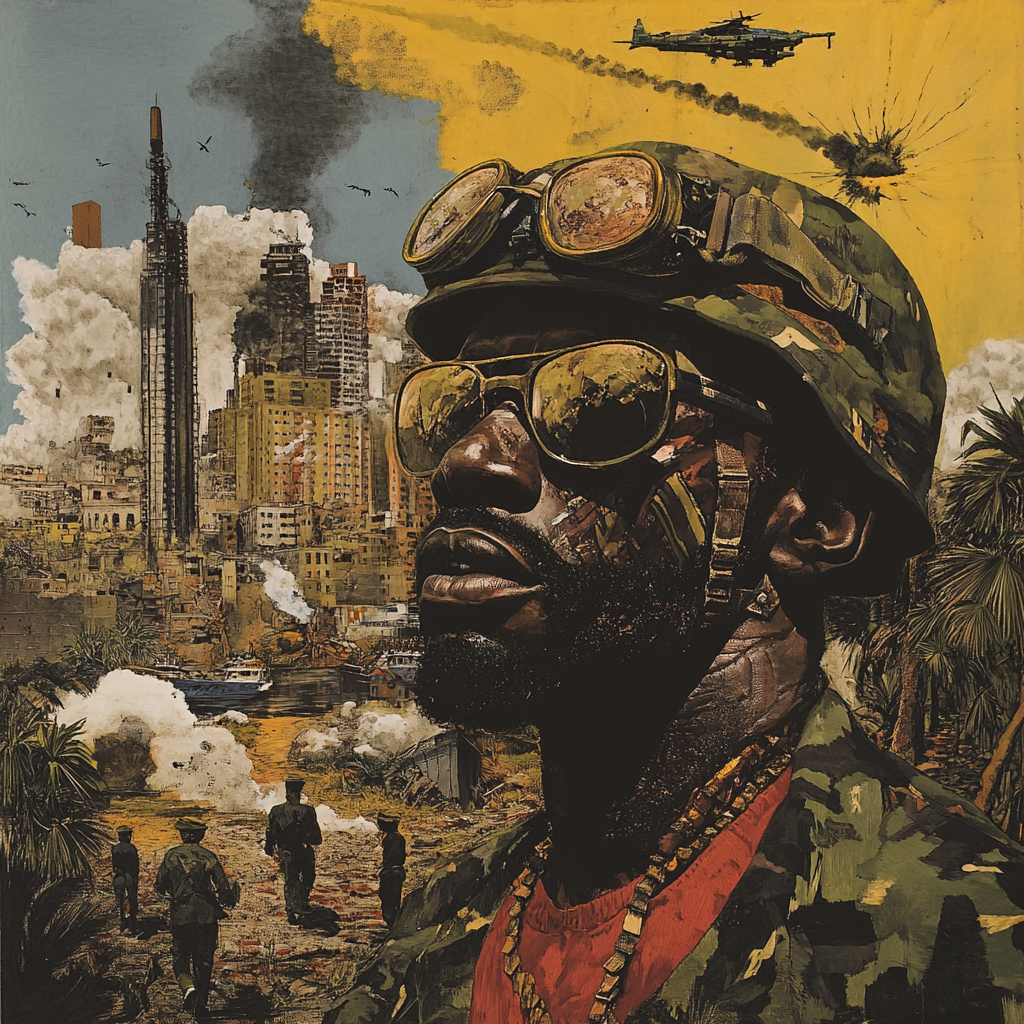
The transatlantic slave trade further strengthened colonial economic systems by providing forced labor, particularly on plantations in the Americas. By the nineteenth century, the colonization of Africa intensified during the so-called Scramble for Africa, as European powers rapidly divided the continent among themselves. These historical developments created interconnected global systems of trade and power that continue to shape international relations.
Colonial powers ruled either directly or indirectly. Under direct rule, they sent their own representatives to govern the colonies. Under indirect rule, they relied on local leaders who operated under colonial guidelines.
Both approaches created systems whose primary purpose was to keep the colonial rulers in power and to restrict the rights and freedoms of the local population. These structures served to protect the interests of the colonial powers rather than to support the people they governed.
Colonial powers used different systems to govern their territories, depending on their objectives and local conditions. One of the most important distinctions was between direct and indirect rule. Under direct rule, colonial administrators from Europe governed the colony themselves and often imposed their own legal systems, languages, and institutions.
This approach was employed, for example, by France in parts of Africa, where assimilation policies aimed to make colonized people, in theory, French citizens—a goal that was rarely achieved in practice. Indirect rule, on the other hand, relied on existing local leaders who were integrated into the colonial administration. Great Britain frequently employed this system, particularly in regions such as Nigeria, where traditional rulers retained a certain degree of influence but ultimately served colonial interests.
Another important distinction is between settlement colonialism and exploitative colonialism. In settlement colonialism, large groups of Europeans moved permanently to the colony and often displaced the indigenous population. Exploitative colonialism, on the other hand, focused primarily on the extraction of resources and labor without significant European settlement.
These systems shaped the political and social structures of the colonies in various ways, but were all designed to maintain control and maximize benefits for the colonial power. The consequences of these systems are still evident today in governance problems and social divisions in former colonies.
The economic structure of the colonies was designed to benefit the ruling nations. Colonies were used to supply raw materials to European industries. Colonizers extracted resources such as minerals, timber, and agricultural products from the territories under their control and sold them either back to the people in the colonies or on other markets at a profit.
British, French, and Belgian rulers, for example, extracted gold, diamonds, rubber, and cocoa from African colonies using forced labor, maximized their profits, and left only minimal benefits for the local population.

On a social level, the colonial system enforced a racist hierarchy. European settlers were viewed as superior and had access to resources, education, and political power, while the local population had few opportunities to improve their lives.
This led to a deep-rooted social divide based on race, with Europeans at the top and the indigenous population left behind with limited rights and restricted access.
Colonialism had profound cultural consequences that reshaped societies around the world. One of the most visible effects is the spread of European languages, which often became official languages in former colonies. For example, English continues to be widely used in countries such as Nigeria and India, while French continues to play an important role in parts of West and Central Africa.
This linguistic influence facilitated global communication but also contributed to the marginalization of indigenous languages. Colonial education systems also reinforced European cultural values and often portrayed them as superior, while local traditions were devalued. For many communities, this led to a loss of cultural identity, as traditional practices, belief systems, and forms of knowledge were suppressed or replaced.
At the same time, colonial encounters also led to cultural exchange and hybrid identities in which elements of European and Indigenous cultures merged. Food, music, and art in many regions reflect this complex interaction. Nevertheless, the imbalance of power meant that such exchanges were rarely on equal terms. Cultural institutions and narratives were often dominated by colonial perspectives, which continue to influence how history is understood to this day.
Efforts to reclaim and preserve indigenous cultures have become an important part of postcolonial societies has emerged as communities seek to reconnect with their heritage and challenge historical narratives that were imposed during the colonial era.
Education was a key tool used by colonial powers to maintain control and shape societies in accordance with their interests. Colonial education systems were typically designed to produce a small group of educated individuals who could assist with administration and communication between the colonizers and the local population.
These systems often prioritized European languages, history, and values, while indigenous knowledge and traditions were neglected or devalued. In many colonies, access to education was limited and unevenly distributed, with opportunities often restricted to certain social groups or regions. For example, mission schools played an important role in spreading Western education in Africa and Asia by combining religious instruction with basic literacy and vocational training.
Although education offered some individuals opportunities for social advancement, it simultaneously reinforced existing hierarchies and dependencies. The focus on European curricula led many students to feel culturally alienated, as they were taught to view their own cultures as inferior. After independence, many former colonies retained elements of these educational systems, which continue to influence national curricula and language policies.
Today, debates focus on the Decolonization Education focuses on integrating local knowledge, promoting linguistic diversity, and eliminating historical inequalities in access to education. These efforts aim to create more inclusive and culturally relevant education systems that better reflect the identities and needs of local communities.
Colonialism also had a significant impact on gender roles and relationships within colonized societies. In many cases, colonial authorities enforced European gender norms that differed from local traditions and often reinforced patriarchal structures. Pre-colonial societies sometimes had more flexible or complementary gender roles, in which women participated in economic, political, and social life in various ways.
Colonial systems, however, often restricted these roles by prioritizing male authority and excluding women from formal power structures. Colonial laws and policies frequently regulated marriage, property rights, and labor in ways that disadvantaged women. For example, men were more likely to be employed in wage-labor systems introduced by colonial economies, while women’s work in agriculture or the domestic sphere was devalued or ignored.
Missionary activities also promoted certain notions of femininity and family life, emphasizing domestic roles for women. At the same time, colonial rule brought new challenges and opportunities, as some women participated in resistance movements or adapted to changing economic conditions. The interplay of gender and race further shaped experiences under colonialism, as women from colonized populations were subjected to both racial discrimination and gender-based inequality.
Understanding these dynamics is crucial for analyzing the long-term social impacts of colonialism, as many of these inequalities persist to this day in various forms. Contemporary movements in former colonies draw on both colonial legacies and local cultural contexts to achieve gender equality.
Colonized populations did not passively accept foreign rule, but instead developed various forms of resistance against colonial control. This resistance ranged from everyday actions, such as preserving cultural traditions, to organized uprisings and independence movements. In many cases, early resistance took the form of armed uprisings against colonial authorities. Over time, strategies evolved to include political organization, intellectual movements, and nonviolent protest.
Leaders such as Mahatma Gandhi promoted nonviolent resistance in India and used methods such as civil disobedience and mass mobilization to challenge colonial rule. Similarly, anti-colonial movements in Africa and Asia increasingly demanded self-determination, particularly after World War II had weakened the European powers.
International organizations also supported decolonization processes by promoting the right of nations to independence. These movements were often met with repression, but ultimately led to the dissolution of most colonial empires by the mid-twentieth century.
The legacy of the resistance continues to shape national identities and political systems in former colonies, where independence is often celebrated as a defining moment of collective achievement.
Spiritual control was another way colonizers expanded their influence. They often sent missionaries to spread Christianity, particularly in the Americas and Africa. The goal was not only to convert the local population but also to alter or eliminate cultural practices that the colonizers mistakenly regarded as inferior.
This religious control was a means of establishing a mindset that accepted only one correct path and pushed local spiritual traditions into the background.
Even today, we see the effects of colonialism in patterns of global inequality. Understanding how colonial powers used political, economic, social, and spiritual systems to maintain control is crucial to recognizing and addressing the lingering legacies of colonialism.
By acknowledging the past and actively working to overcome its lingering effects, we can move toward a world of equal opportunities and respect for all cultures, regardless of history or background.
https://www.britannica.com/topic/Western-colonialism
https://ourworldindata.org/democracy
https://www.bpb.de/kurz-knapp/lexika/politiklexikon/17687/kanton/
https://www.britannica.com/topic/indirect-rule
https://www.britannica.com/topic/decolonization
https://www.britannica.com/science/cultural-globalization
https://www.bpb.de/themen/gender-diversitaet/frauenbewegung/